Best Face Sunscreen for Darker Skin Tones: Coppertone Wins

A spec-by-spec comparison of six face sunscreens, from a 1.7 oz SPF 60 lotion to a 7 oz SPF 50 bottle. Which finish claims hold up, what tinted really means, and when the cheapest bottle is the smarter buy.

By Corey DuncanUpdated 18 min read
On this page
- Best face sunscreen for darker skin tones at a glance
- Why three of these were nearly cut
- 1. Coppertone Every Tone Face and Body Sunscreen Lotion SPF — Best overall
- 2. CeraVe Tinted Sunscreen for Face — Best for heavy use
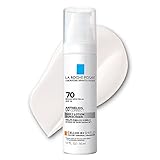
- 3. La Roche-Posay Anthelios UV Correct SPF 70 Face Sunscreen — Best premium
- 4. Black Girl Sunscreen Original SPF 30 Face & Body Sunscreen — Best compact
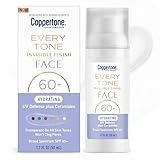
- 5. Coppertone Every Tone Invisible Face Sunscreen Lotion SPF — Best budget pick
- 6. Eucerin Radiant Tone Daily Face Lotion — Best for families
- What does no white cast actually mean on a label?
- SPF 30, 50 or 60: which number should decide it?
- How long does a 1.7 oz bottle last on a face?
- Tinted or clear: which one suits you?
- What the listings do not tell you
- The verdict
- FAQ
The best face sunscreen for darker skin tones is Coppertone Every Tone SPF 50, a 7 oz bottle that carries the most product of any pick here at the mid price position. If you want a mineral filter instead of a chemical one, CeraVe's Tinted Sunscreen SPF 30 uses zinc oxide and titanium dioxide only. Both are lotions. Neither is a tint-matching system, so read the finish section before you commit.
This guide is not for anyone hunting a foundation-grade shade match. Three of these six are clear or sheer lotions with no shade at all, and the one tinted pick ships in a single shade called Light. If shade matching is the whole point of your search, a tinted mineral range with four or more shades is where you should be looking, not this set. What follows is a comparison of protection level, bottle size and finish claims, judged on published specifications.
Best face sunscreen for darker skin tones at a glance
| Pick | SPF | Size | Price |
|---|---|---|---|
| 50 | 7 oz | Check Price | |
Best for heavy use CeraVe Tinted Sunscreen for Face |
30 | 1.7 fl oz | Check Price |
Best premium La Roche-Posay Anthelios UV Correct |
70 | 1.7 fl oz | Check Price |
Best compact Black Girl Sunscreen Original SPF 30 |
30 | 2 fl oz | Check Price |
Best budget pick Coppertone Every Tone Invisible Face Sunscreen |
60 | 1.7 fl oz | Check Price |
Best for families Eucerin Radiant Tone Daily Face Lotion |
30 | 1.7 oz | Check Price |




Why three of these were nearly cut
I screened this set on published specifications, and three picks came close to being dropped. Naming the reasons tells you more than a scoring rubric would.
Reason one: a single shade. The CeraVe tinted lotion is listed in the colour Light. The brand says three shades exist across the line, but this listing is one of them. A single light shade in a guide about deeper complexions is a real problem, and it survived only because the filter system is worth having on its own terms.
Reason two: SPF 30 in a category where 50 and 60 exist. Three of the six sit at SPF 30. That is the floor most dermatology bodies suggest for daily wear, and it is fine. It is also the lowest number on this table when two picks reach 50 and 60 and one reaches 70.
Reason three: no bottle-size advantage. Four picks land at or near 1.7 oz. In a category you are meant to use daily and reapply, that is a small bottle. Only Coppertone's 7 oz body-and-face lotion breaks out of that band, and one pick reaches 2 fl oz.
What survived the screen did so because it clears one of three bars: the most product per bottle, the highest published SPF, or a filter and ingredient story that a specific skin type needs. Everything here is a lotion, every one is broad spectrum by its label, and every one is a single unit rather than a multipack. The best face sunscreen for darker skin tones in this set is the one that clears the bar that matters to you.
1. Coppertone Every Tone Face and Body Sunscreen Lotion SPF — Best overall
A 7 oz bottle at SPF 50 that covers face, neck, chest and arms without you rationing it.
Best for: anyone covering face and neck daily and refilling too often Skip it if: you want a tint or a mineral-only filter
Volume is the quiet reason this wins. At 7 oz it holds roughly four times what the 1.7 oz picks hold, and it sits only third in price position across the six. Sunscreen fails when people use too little of it, and a big bottle removes the incentive to skimp. The dimensions are 7.5 x 2 x 2 in, so it is a bathroom-shelf bottle rather than a handbag one.
Coppertone lists SPF 50 and says the broad spectrum formula stops up to 98% of damaging UV rays. The listing also claims a clear blend with no white residue on all skin tones, plus vitamin E for moisture, 80-minute water resistance, and a formula free from fragrance, oxybenzone, octinoxate, PABA and phthalates. Those are the brand's claims, and the fragrance-free note matters if you react to scent. Model BE48997, released 2022.
The trade-off against the rest of this set is targeting. This is a face and body lotion, so it does not carry the niacinamide of the La Roche-Posay pick or the ceramide list of the smaller Coppertone face version. You get volume and a high SPF, not a treatment claim.
Pros:
- 7 oz, the largest bottle in this comparison
- SPF 50 with an 80-minute water resistance claim
- Fragrance-free per the listing
- Mid price position despite four times the volume
- Free of oxybenzone, octinoxate, PABA and phthalates
Cons:
- Too large at 7.5 in to carry for reapplication
- No tint at all, so no colour correction
- Chemical filters rather than mineral
- Fewer treatment ingredients than the premium picks
2. CeraVe Tinted Sunscreen for Face — Best for heavy use
The only 100% mineral pick here, with zinc oxide and titanium dioxide as the sole filters.

Best for: sensitive or reactive skin that needs a mineral filter Skip it if: you are between shades or dislike any tint at all
Filter chemistry is what sets this apart in the set. CeraVe states the formula is oxybenzone free, avobenzone free and benzene free, containing only physical filters. If you have reacted to a chemical sunscreen before, that narrows your options fast, and this is the only pick here that meets the brief. It also sells faster than any other pick in this comparison.
The specifications: SPF 30, 1.7 fl oz, 2.57 oz shipping weight, 5.95 x 1.54 x 2.56 in, released 2024. The colour on this listing is Light. CeraVe says the line comes in three flexible tinted shades and that niacinamide and hyaluronic acid sit in the formula alongside three ceramides. It also says the lotion can be worn alone or under makeup as a tinted primer.
That single Light shade is the honest limitation. Mineral filters are white in the jar, and a light tint is what keeps them from casting on paler skin, not deeper skin. Check the shade on the live listing before you buy, because this is the one specification in the set that could go wrong on your face.
Pros:
- Only 100% mineral formula in this comparison
- Oxybenzone, avobenzone and benzene free per the listing
- Niacinamide, hyaluronic acid and three ceramides claimed
- Doubles as a tinted primer under makeup
- Sells faster than the rest of this set
Cons:
- Listed in a single Light shade
- SPF 30, the lowest number on this table
- Small 1.7 fl oz bottle for daily face and neck use
- Mineral filters risk a cast if the shade is wrong
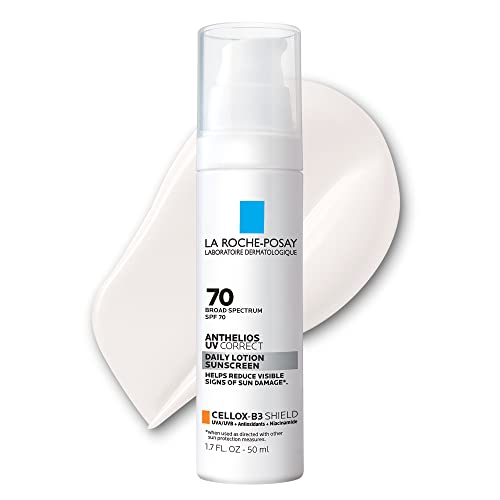
3. La Roche-Posay Anthelios UV Correct SPF 70 Face Sunscreen — Best premium
SPF 70 with niacinamide, the highest published protection number in this comparison.
Best for: someone targeting uneven tone alongside daily SPF Skip it if: you want the most protection per dollar
Two things make this the premium pick. SPF 70 is the highest number here, above Coppertone's 60 and more than double the three SPF 30 picks. And La Roche-Posay says the formula contains niacinamide, a form of vitamin B3 it describes as known to help visibly fade skin discoloration. If post-inflammatory marks are your actual concern, that combination is the most direct answer in the set.
The brand calls it Cellox-B3 Shield technology and describes broad spectrum UVA and UVB protection with antioxidants. It also claims a non-whitening, lightweight sheer finish that blends into all skin tones, and says it helps correct uneven tone, fine lines and rough texture. The formula is oxybenzone free and octinoxate free. Specifications: 1.7 fl oz, 1.76 oz weight, 5.97 x 1.5 x 1.5 in, released 2022.
It is also the highest price position of the six, and it holds 1.7 fl oz. That is the trade-off. You pay the most in this set for the least volume alongside three other 1.7 oz picks, and the treatment claims are what you are buying rather than coverage per ounce.
Pros:
- SPF 70, the highest figure in this comparison
- Niacinamide included for discoloration, per the brand
- Slim 1.5 in diameter tube that travels well
- Oxybenzone free and octinoxate free
- Sheer non-whitening finish claimed on all tones
Cons:
- Highest price position of the six picks
- Only 1.7 fl oz for the money
- Chemical filters, so not an option for mineral-only users
- No tint, so no immediate evening of tone
4. Black Girl Sunscreen Original SPF 30 Face & Body Sunscreen — Best compact
The slimmest bottle here at 0.94 in deep, and the only pick formulated explicitly for deeper complexions.

Best for: bag carrying and midday reapplication Skip it if: you want SPF above 30 or a bigger bottle
The dimensions are the story: 5 x 1.4 x 0.94 in. That is under an inch deep, which is the difference between a bottle that lives in a bag and one that stays on a shelf. It also holds 2 fl oz, more than the four 1.7 oz picks, and it sits second-cheapest in this set. Reapplication is the step almost everyone skips, and a flat bottle you actually carry fixes that better than any formula does.
The brand describes it as made by women of color, for people of color, and says the lotion dries completely clear on all skin tones with no white residue. It lists avocado oil, jojoba oil, cacao and sunflower seed oil for moisture, and says the formula is free from parabens, fragrance, oxybenzone and octinoxate. Model BGS30-2Oz, SPF 30, 2 oz weight.
SPF 30 is the ceiling here, which is the honest cost. Against Coppertone's 60 in the same 1.7 oz class or La Roche-Posay's 70, this gives you the least published protection in the set. It sells briskly, second only to the CeraVe among these six.
Pros:
- 0.94 in deep, the slimmest bottle in this comparison
- 2 fl oz, more product than the four 1.7 oz picks
- Second-cheapest of the six
- Free from parabens, fragrance, oxybenzone and octinoxate
- Named plant oils for moisture
Cons:
- SPF 30, tied for the lowest here
- No tint or colour correction
- No published warranty or released date on the listing
- Chemical filters rather than mineral
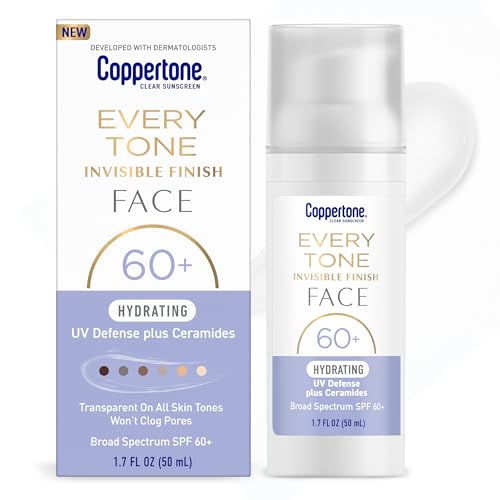
5. Coppertone Every Tone Invisible Face Sunscreen Lotion SPF — Best budget pick
SPF 60 at the cheapest price position in this set, with ceramides and a non-comedogenic claim.
Best for: layering under makeup on a tight budget Skip it if: you need one bottle for face and body
This is the value calculation of the whole comparison. SPF 60 is the second-highest number here, behind only the La Roche-Posay at 70, and this is the cheapest of the six. Nothing else in the set gets close to that ratio. If your budget is the binding constraint, the decision is basically made.
Coppertone says it was developed with dermatologists, blends in clear for an invisible finish on all skin tones, and is enriched with ceramides. It also calls the lotion non-comedogenic and says it layers invisibly under makeup, with broad spectrum protection stopping up to 98% of damaging UV rays. The formula is listed free from oxybenzone, octinoxate, PABA, phthalates and dyes. Released 2024, 1.7 oz weight, 1.61 x 5.59 x 2.4 in.
Two gaps against the rest. It is the slowest seller of the six, so it is the least established pick here. And unlike the SPF 50 version from the same brand, this is a face lotion only at 1.7 fl oz, so you will need something else for shoulders and arms.
Pros:
- SPF 60, second-highest figure in this comparison
- Cheapest of the six picks
- Ceramides and a non-comedogenic claim
- Free from oxybenzone, octinoxate, PABA, phthalates and dyes
- Designed to layer under makeup
Cons:
- Slowest seller of the six
- Face only, so no body coverage
- 1.7 fl oz runs out quickly with daily use
- No colour or shade listed, so no tint option
6. Eucerin Radiant Tone Daily Face Lotion — Best for families
A dark spot lotion with Thiamidol that happens to carry SPF 30, rather than the reverse.

Best for: a dark spot routine with SPF built in Skip it if: you want the highest SPF here
Read the category path and the priority becomes clear: this sits under face moisturizers, not sunscreens. Eucerin leads with Thiamidol and says the lotion helps visibly reduce the look of dark spots from sun exposure, aging and imperfections, with radiance improving in as little as two weeks when used regularly. The SPF 30 is described as helping prevent dark spots from reappearing. It is a treatment lotion with protection attached.
That matters if uneven tone is your reason for wearing sunscreen in the first place, which for a lot of deeper complexions it is. The brand calls the formula clinically proven, suitable for all skin types, lightweight, non-sticky and non-comedogenic. Specifications are thin: 1.7 oz, released 2024, no listed dimensions or colour.
Two honest problems. It is the second-highest price position in this set while carrying the lowest SPF number, tied at 30. And it publishes fewer specifications than any other pick, with no dimensions, no colour and no model number, so you cannot judge bottle shape or travel fit before it arrives. Treat it as a step in a routine, not as your only sun protection on a long day outdoors.
Pros:
- Only pick built around Thiamidol for dark spots
- Non-comedogenic and non-sticky per the brand
- SPF 30 broad spectrum included in a daily moisturizer
- Stated as suitable for all skin types
Cons:
- Second-highest price position with the lowest SPF here
- Fewest published specifications of the six
- No dimensions listed, so travel fit is unknown
- 1.7 oz and face only
What does no white cast actually mean on a label?
Four of these six listings make some version of a no-white-cast claim, and the phrase does not mean the same thing each time. Reading it correctly is the single most useful skill for choosing the best face sunscreen for darker skin tones.
Here is what the wording tends to signal:
- "Blends in clear" on a chemical sunscreen, as Coppertone says of both Every Tone products. Chemical filters are transparent to begin with, so a clear finish is the expected result rather than an engineering feat.
- "Sheer finish, non-whitening" on the La Roche-Posay lotion. Sheer means thin enough to disappear, which is a texture claim about how the lotion sits rather than a colour claim.
- "Dries completely clear on all skin tones" on Black Girl Sunscreen. Same chemical-filter logic, stated more directly.
- "Sheer tinted 100% mineral" on CeraVe. This is the interesting one. Zinc oxide and titanium dioxide are white pigments, so the tint is there to counteract them. Whether that works on you depends entirely on the shade.
The rule that follows: on a chemical sunscreen, a clear-finish claim is usually reliable. On a mineral sunscreen, it depends on shade match, and no marketing sentence can settle that for you. None of these claims is a verified measurement, and none of the six can be said to satisfy a shade-matching requirement, because only one carries a shade at all.
SPF 30, 50 or 60: which number should decide it?
SPF is the specification everyone compares first, and it is the one that misleads most. The spread across these six picks is real: 30, 30, 30, 50, 60, 70. But protection stops scaling in a useful way well before the top of that range, and the gap between labelled and actual protection comes down to how much you apply, not what the bottle says.
So use SPF as a tiebreaker, not a decider, in this order:
- If you are indoors most of the day, SPF 30 is enough, and the three SPF 30 picks compete on formula instead. That is where the CeraVe mineral filters and Eucerin's Thiamidol earn their spots.
- If you are outdoors for hours, the number matters less than the volume. Coppertone's 7 oz bottle at SPF 50 beats a 1.7 oz bottle at SPF 70 in practice, because reapplication is what actually protects you.
- If you want the highest label figure, La Roche-Posay's SPF 70 is the answer, and it is also the highest price position of the six.
The cutoff worth naming: below about 2 fl oz per bottle, you are going to ration, and rationing costs you more protection than moving from SPF 50 to SPF 70 gains you.
How long does a 1.7 oz bottle last on a face?
Four of these picks hold 1.7 oz. One holds 2 fl oz. One holds 7 oz. That spread is the most consequential specification in the set and nobody puts it in a comparison table.
A face-and-neck application takes roughly the amount that covers two fingertips, and a proper day includes at least one reapplication. Run that arithmetic on a 1.7 oz bottle and you are shopping again within weeks of daily use, not months. Run it on the 7 oz Coppertone and the same routine stretches roughly four times further, for a mid price position rather than a premium one.
Practical consequences:
- Small bottles cause rationing. People apply a thin layer to make the tube last, which quietly lowers the protection they actually get.
- Two bottles beats one. A big bottle at home plus the 0.94 in Black Girl Sunscreen in a bag covers both the morning application and the midday one.
- Face-only sizing has a hidden cost. Five of these six are 1.7 to 2 oz face products. If your ears, neck and hands also see sun, only the 7 oz Coppertone handles all of it from one bottle.
Cost per ounce is the metric I would use here, and the link on each pick will tell you today's figure better than any sentence I could write.
Tinted or clear: which one suits you?
This is where the modifier in the search gets complicated, and I would rather say it plainly than dress it up. Only one of these six products lists a shade, and that shade is Light. The other five are clear or sheer lotions with no colour at all.
That has a consequence. If you came here wanting a sunscreen that also evens out your complexion, none of these six can be promised to do that for a deeper skin tone. What they can do is protect without leaving a grey or ashy film, which is the more common complaint and a genuinely different problem.
Choose by what you actually want:
- Protection with no visible trace: any of the four chemical-filter picks. Coppertone's two, Black Girl Sunscreen, and La Roche-Posay all claim clear or sheer finishes.
- Protection plus tone work over weeks: Eucerin's Thiamidol lotion or La Roche-Posay's niacinamide formula. Both are treatment claims measured in weeks, not instant colour.
- Protection with a mineral filter: CeraVe only, and check the shade against your skin on the live listing first.
- Protection plus immediate colour correction on deep skin: not this set. Look at a dedicated tinted mineral range with a wide shade ladder instead.
What the listings do not tell you
Even a careful reading of six listings leaves real gaps. These are the ones I would want closed before buying.
Filter percentages. Not one listing publishes how much zinc oxide, titanium dioxide or avobenzone is in the bottle. The CeraVe lists its filters by name, which is more than the others do, but no concentration appears anywhere.
Water resistance for five of six. Only the 7 oz Coppertone publishes a figure, 80 minutes. The other five say nothing about it, so treat them as everyday wear rather than swim or workout products until the label tells you otherwise.
Shade range in the box. CeraVe says three shades exist. This listing is Light. Which shades are available and how deep they run is not on the page.
Pump versus squeeze. Dimensions hint at shape, so the 0.94 in Black Girl Sunscreen is clearly flat and the 7.5 in Coppertone is a tall bottle. Dispensing type is not stated for any of them.
Warranty. None of the six publishes one, which is normal for skincare but worth saying out loud. Every one of these is a single unit with a count of 1, so there is no multipack to fall back on either.
The verdict
Split this by what you are willing to spend, because the set divides cleanly into three tiers.
At the entry level, Coppertone Every Tone Invisible SPF 60 is the standout. It is the cheapest of the six and carries the second-highest SPF figure here, with ceramides and a non-comedogenic claim on top. Black Girl Sunscreen sits just above it and trades SPF 60 for SPF 30, 2 fl oz instead of 1.7, and a 0.94 in bottle that fits any bag.
In the middle tier, Coppertone Every Tone SPF 50 is my overall pick and the one I would buy first. Seven ounces at SPF 50, fragrance-free, 80 minutes of stated water resistance, and enough volume that you stop rationing. CeraVe's tinted mineral lotion occupies the same tier with a completely different argument: zinc oxide and titanium dioxide as the only filters, which is the deciding factor if chemical sunscreens irritate you.
At the premium end, La Roche-Posay Anthelios UV Correct is the most expensive pick here and gives you SPF 70 plus niacinamide for discoloration. Eucerin's Radiant Tone lotion is close behind on price with Thiamidol and SPF 30, aimed squarely at dark spots.
The cutoff that decides it: if you use sunscreen every single day, buy on volume and take Coppertone's 7 oz bottle. If you use it as one step in a treatment routine, buy on active ingredients and pay premium.
FAQ
Is the best face sunscreen for darker skin tones worth paying premium for?
The best face sunscreen for darker skin tones only justifies a premium price when you are buying a specific active ingredient. La Roche-Posay's SPF 70 and niacinamide, or Eucerin's Thiamidol, give you something the cheaper picks do not. If you just want protection with no cast, the cheapest pick here delivers SPF 60 and ceramides for less.
Which SPF number actually matters for daily wear?
Which SPF number matters depends on how long you are outside. SPF 30 covers indoor days with a commute, and three picks here sit at that level. For hours outdoors, volume beats the label figure: a 7 oz bottle at SPF 50 protects better in practice than 1.7 oz at SPF 70, because you will actually reapply.
Do mineral sunscreens leave a white cast on deep skin?
Mineral sunscreens leave a cast more often than chemical ones, because zinc oxide and titanium dioxide are white pigments. The CeraVe pick here is the only 100% mineral formula, and it counters that with a tint listed as Light. Check the shade on the live listing before you buy. Chemical formulas like Coppertone's blend clear by default.
CeraVe or Coppertone Every Tone: which one should I pick?
CeraVe or Coppertone comes down to filter chemistry and volume. CeraVe uses only zinc oxide and titanium dioxide, so it is the pick for reactive skin, and it sells faster than anything else here. Coppertone Every Tone SPF 50 gives you 7 oz instead of 1.7, a higher SPF, and a fragrance-free formula for a mid price.
What mistake do people make buying face sunscreen?
The mistake people make buying face sunscreen is choosing on SPF alone and ending up with a bottle too small to use generously. Four of these six hold 1.7 oz. Rationing a small tube costs you more real protection than the gap between SPF 50 and SPF 70 ever gains. Buy volume, then compare formulas.
Start with the 7 oz Coppertone Every Tone SPF 50 and add a slim 2 fl oz bottle for your bag. That pairing solves the problem this category actually has, which is not the label number but the fact that most bottles are too small and too precious to use properly. Follow the Check Price link on each pick, compare cost per ounce rather than cost per bottle, and check the shade field if you are considering the tinted CeraVe. One generous application every morning from a bottle you are not protecting beats a premium tube you are eking out.