Best Matte Face Sunscreen by Finish and SPF
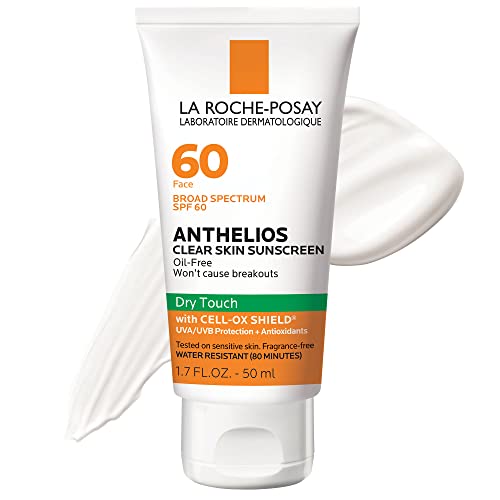
Five matte face sunscreens compared for acne-prone skin, from a La Roche-Posay SPF 60 winner to a niacinamide-powered EltaMD upgrade. Specifications, trade-offs, and who each one actually suits.

By Corey DuncanUpdated 14 min read
On this page
- Best matte face sunscreen for acne prone skin at a glance
- How I cut the shortlist to five
- What actually decides a matte finish
- 1. La Roche-Posay Anthelios Clear Skin Oil Free Face — Best overall
- 2. EltaMD UV Clear Blemish-Prone and Oil Balancing — Best premium
- 3. Eucerin Clear Skin Face Sunscreen Lotion — Best upgrade
- 4. Neutrogena Clear Face Sunscreen Lotion SPF 50 — Most versatile
- 5. Neutrogena Clear Face Sunscreen Lotion SPF 30 — Best budget pick
- Chemical, mineral, or hybrid: which filter suits breakout-prone skin?
- How long does one bottle last if you use enough?
- What the listings will not tell you about acne-prone claims
- The verdict
- FAQ
The best matte face sunscreen for acne prone skin is La Roche-Posay Anthelios Clear Skin Oil Free SPF 60, a 1.7 oz oil-absorbing formula that stays matte in heat and humidity and lists as non-comedogenic, oxybenzone-free, and fragrance-free. EltaMD UV Clear Blemish-Prone and Oil Balancing SPF 50 is the alternate pick when you want a transparent zinc oxide filter and a niacinamide formula the brand claims reduces visible blemishes by 65%. Both are 1.7 oz, both pump-friendly for daily use, and the two ends of a five-bottle shortlist.
Best matte face sunscreen for acne prone skin at a glance
| Pick | SPF & filter | Size | Price |
|---|---|---|---|
Best overall La Roche-Posay Anthelios Clear Skin |
SPF 60 chemical |
1.7 fl oz | Check Price |
Best premium EltaMD UV Clear Blemish-Prone |
SPF 50 zinc oxide |
1.7 oz | Check Price |
Best upgrade Eucerin Clear Skin Face SPF 50 |
SPF 50 chemical |
2.5 fl oz | Check Price |
Most versatile Neutrogena Clear Face SPF 50 |
SPF 50 chemical |
3 fl oz | Check Price |
Best budget pick Neutrogena Clear Face SPF 30 |
SPF 30 chemical |
3 fl oz | Check Price |



How I cut the shortlist to five
I started with facial sunscreens that carry both a matte or oil-control claim on the listing and a non-comedogenic label, then pulled the ones formulated for oily or acne-prone skin. Three cuts followed.
First, anything labelled dewy, glowing, or hydrating-first came off. Those finishes read as pretty in the mirror and greasy on camera by 3pm, which is the opposite of what a matte face sunscreen is meant to solve.
Second, tinted-only formulas came off. A tint is a preference, and mixing tinted and untinted in one table makes the SPF comparison harder to read. All five bottles here are untinted.
Third, anything with fragrance in the ingredient list came off unless the brand paired it with an explicit non-comedogenic and allergy-tested claim. Fragrance is a common trigger for breakout-prone skin, and there is no reason to accept it in this category when unscented options exist.
What survived: five bottles between 1.7 and 3 fl oz, four at SPF 50 or higher, one budget SPF 30, four chemical filters plus one transparent zinc mineral option. That is a genuine spread across price, filter type, and finish, which is what the comparison needs.
What actually decides a matte finish
Most guides in this category compare SPF numbers. SPF is a floor, not a decider. SPF 30 blocks about 97% of UVB, SPF 50 about 98%, and past SPF 30 the extra numbers matter more for margin of error in how much you apply than for a real jump in protection. Every pick here clears that floor.
The real deciding criterion for breakout-prone skin is how the formula handles sebum in the six hours after you apply it. That is a mix of three things: oil-absorbing ingredients, filter chemistry, and the finish the brand engineers into the vehicle.
La Roche-Posay's Anthelios Clear Skin builds the whole formula around absorbing pore-clogging oil, and the brand states it holds up in heat and humidity. Eucerin lists oil-absorbing minerals plus a dry-touch finish. EltaMD's route is different: 5% niacinamide to regulate sebum production, paired with transparent zinc oxide. Both Neutrogena Clear Face lotions call themselves matte and non-comedogenic but lean harder on the water-resistant, workout-friendly angle.
If you are choosing a matte face sunscreen for acne prone skin, read the ingredient claim, not the SPF number. Oil absorption and sebum regulation are what keep the finish flat.
1. La Roche-Posay Anthelios Clear Skin Oil Free Face — Best overall
A 1.7 oz SPF 60 built around absorbing oil, and the pick I would default to for shiny, breakout-prone skin.
Best for: oily, breakout-prone skin that shines by lunchtime Skip it if: you prefer mineral filters over chemical ones
Anthelios Clear Skin is the only pick here that combines SPF 60 with an oil-absorbing claim written into the core marketing, not tacked on. La Roche-Posay states the formula absorbs pore-clogging oil even in heat and humidity, which is the specific problem this category exists to solve. The brand adds Cell-Ox Shield antioxidants and rigorous skin-tolerance testing, and the ingredient list is oxybenzone-free, octinoxate-free, fragrance-free, oil-free, and paraben-free.
Set-wise, this is the only SPF 60 in the shortlist and the smallest bottle at 1.7 fl oz, which changes the value calculation. You get the highest published SPF number and the tightest oil-control positioning, but you get less product than either Neutrogena bottle. Against EltaMD, this is the chemical-filter alternative for anyone who dislikes the slight cast a zinc oxide leaves on some skin tones. Against Eucerin, it commits harder to oil absorption and gives up nothing on non-comedogenic labelling.
Pros:
- SPF 60, the highest in the shortlist
- Oil-absorbing claim written into the core formula
- Fragrance-free, oxybenzone-free, paraben-free
- Non-comedogenic and allergy-tested per the listing
- Compact 1.7 fl oz size travels easily
Cons:
- Smallest bottle in the shortlist at 1.7 fl oz
- Premium price position for a chemical filter
- No pump; standard tube dispenser
2. EltaMD UV Clear Blemish-Prone and Oil Balancing — Best premium
The zinc oxide alternative, powered by 5% niacinamide with clinical claims the other four do not make.

Best for: sensitive, blemish-prone skin that wants a mineral filter Skip it if: you need a larger bottle for body use too
EltaMD is the only mineral pick here, using transparent zinc oxide for its SPF 50 protection instead of a chemical filter stack. That matters if your skin flares with avobenzone or octocrylene, or if you want a UV filter that starts working the moment you apply it. The brand pairs the zinc with 5% niacinamide, and the listing states clinical results of a 65% reduction in visible blemishes, 61% reduction in excess oil, and 25% reduction in visible pore size. Treat those figures as EltaMD's claims from a brand-run study, not independent measurements.
This is the most expensive pick in the shortlist and the fastest seller of the five by a wide margin. Against Anthelios, EltaMD trades six SPF points for a mineral filter and a sebum-regulating active. Against Eucerin, it swaps a chemical formula for zinc and adds niacinamide. The 1.7 oz pump bottle ties with Anthelios for the smallest size, which is the trade-off for a premium mineral formulation.
Pros:
- Only transparent zinc oxide filter in the shortlist
- 5% niacinamide targets sebum and post-acne marks
- Pump dispenser controls dose
- Fragrance-free, dye-free, paraben-free
- Sells faster than the rest of this set
Cons:
- Highest price position in the shortlist
- 1.7 oz ties for smallest bottle
- Mineral filters can leave a faint cast on deeper skin tones
- Clinical figures are brand-cited, not independent
3. Eucerin Clear Skin Face Sunscreen Lotion — Best upgrade
A 2.5 fl oz SPF 50 with a dry-touch finish and five antioxidants, sitting in the middle of the shortlist on price.

Best for: daily wear under makeup with a dry-touch finish Skip it if: you want the highest SPF number available
Eucerin Clear Skin sits in the mid-price position and reads as the most makeup-friendly of the five on paper. The brand describes a lightweight texture that leaves a non-oily, matte finish, adds oil-absorbing minerals for acne-prone skin, and lists five antioxidants for UVA/UVB defence. It is developed with dermatologists per the listing, hypoallergenic, and free of fragrance, dyes, parabens, PABA, phthalates, oxybenzone, and octinoxate, which is the cleanest exclusion list in the shortlist.
The 2.5 fl oz bottle is the middle size of the five and comes as a pump, which controls the dose better than a squeeze tube. Against Anthelios, Eucerin gives up ten SPF points but gains a pump and a slightly larger bottle. Against the Neutrogena SPF 50, it costs more per ounce but the exclusion list is longer. It is the slowest seller of the five here, which is worth noting but not decisive.
Pros:
- Dry-touch, matte finish claim
- Five-antioxidant formula
- Pump dispenser controls dose
- Longest exclusion list in the shortlist
- Mid-size 2.5 fl oz bottle
Cons:
- Ten SPF points below Anthelios
- Slowest seller of the five here
- Mid-price position for a chemical filter
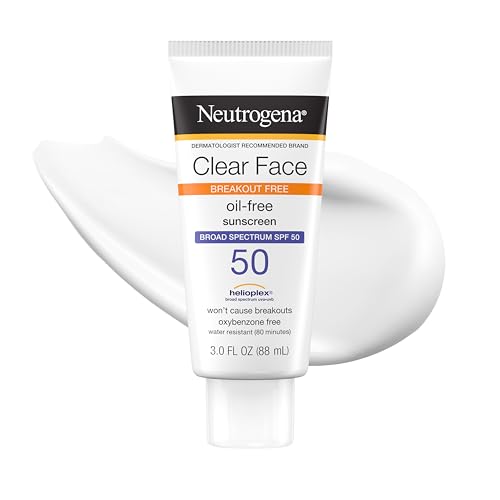
4. Neutrogena Clear Face Sunscreen Lotion SPF 50 — Most versatile
A 3 fl oz SPF 50 that doubles as a workout sunscreen, water-resistant up to 80 minutes.
Best for: one bottle that handles desk days and long runs Skip it if: you want a dedicated matte-first formula
Neutrogena Clear Face SPF 50 is the pick if you want one bottle that covers office days, outdoor runs, and beach afternoons without carrying two sunscreens. The listing calls out an oil-free, breathable texture, non-comedogenic formulation, and water resistance up to 80 minutes, and the 3 fl oz bottle is the largest in the shortlist tied with the SPF 30 version. Neutrogena states the formula is oil-free and oxybenzone-free, and comfortable to layer under makeup.
Where it lands in this set: the second-cheapest of the five, the largest bottle tied with its SPF 30 sibling, and the second-fastest seller. Against Anthelios, you trade ten SPF points and the strongest oil-control positioning for nearly twice the volume and water resistance. Against Eucerin, you get the same SPF 50 in a bigger bottle at a lower price, but you lose the dry-touch finish claim and the longer exclusion list. The trade-off here is versatility over specialisation.
Pros:
- Largest bottle in the shortlist at 3 fl oz
- Water-resistant up to 80 minutes
- Entry-price position with SPF 50
- Oxybenzone-free and Hawaii Act 104 compliant
- Second-cheapest of the five
Cons:
- Matte claim is present but not the core positioning
- No pump, standard flip-cap bottle
- Bigger footprint, less travel-friendly
5. Neutrogena Clear Face Sunscreen Lotion SPF 30 — Best budget pick
The cheapest of the five, and a fair entry point if you want to test a matte face SPF before committing.

Best for: a low-commitment first try at a matte face SPF Skip it if: you want SPF 50 or higher
Neutrogena Clear Face SPF 30 is the cheapest of the five and the oldest formulation here, released in 2011 per the listing. It shares the Clear Face family's non-comedogenic, oil-free, matte-finish positioning, uses Helioplex technology for broad-spectrum defence, and is water-resistant up to 80 minutes. The filter stack is Avobenzone, Homosalate, Octisalate, and Octocrylene, and the bottle is oxybenzone-free and Hawaii Act 104 compliant.
Set-wise, this is the entry ticket. It has the lowest SPF number in the shortlist, ties with its SPF 50 sibling for the largest 3 fl oz bottle, and it is the slowest seller by a clear margin. The trade-off is honest: you get a matte, oil-free face SPF at the lowest price, and you accept SPF 30 instead of SPF 50 or 60. For someone who has never used a dedicated face sunscreen and wants to test whether a matte formula suits their routine, that is a defensible starting point.
Pros:
- Cheapest of the five
- Largest bottle tied at 3 fl oz
- Water-resistant up to 80 minutes
- Oxybenzone-free filter stack
- Long-established Clear Face formulation
Cons:
- SPF 30 is the lowest in the shortlist
- Oldest formulation in the set
- Slowest seller of the five here
- No pump dispenser
Chemical, mineral, or hybrid: which filter suits breakout-prone skin?
Four of the five picks here use chemical filters. EltaMD is the one exception, running on transparent zinc oxide. Neither filter type is inherently better for acne-prone skin, but they behave differently and it is worth knowing which side you sit on before you buy.
Chemical filters absorb UV and convert it to heat. That heat can bother reactive skin in warm weather. The formulas tend to feel lighter and layer more transparently under makeup, which is why the Neutrogena, Eucerin, and La Roche-Posay picks are all pleasant to wear daily.
Mineral filters like zinc oxide sit on the skin and reflect UV. They start protecting the moment you apply them, and they suit skin that flares with avobenzone or octocrylene. The cost is a possible faint cast, especially on deeper skin tones, and a slightly heavier feel.
How to choose:
- If chemical sunscreens have not caused problems in the past, the matte finish is your deciding factor and Anthelios wins.
- If your skin flares with fragrance-free chemical formulas, or you specifically want zinc, EltaMD is the answer.
- If you have never used either and your skin is sensitive, start with a mineral and reassess.
How long does one bottle last if you use enough?
Dermatologists cite a quarter-teaspoon (about 1.25 ml) as the correct dose for the face alone, or roughly two finger-lengths of product. Add the ears and neck and you are closer to a half-teaspoon. Applied once daily, a 1.7 oz (50 ml) bottle covers around 40 face-only doses, or under six weeks. A 3 fl oz (about 89 ml) bottle stretches to closer to ten weeks at the same dose.
- Anthelios and EltaMD, both 1.7 oz: about 40 face-only applications
- Eucerin, 2.5 fl oz: about 55 to 60 applications
- Both Neutrogena Clear Face bottles, 3 fl oz: about 70 applications
The point is not the exact number. The point is that a matte face sunscreen for acne prone skin only works if you apply enough of it, and the smallest bottles empty faster than most buyers expect. If you plan to reapply mid-day, halve those numbers. Factor that into the price you see on the listing, because a cheaper bottle you underdose is worse value than a pricier one you use properly.
What the listings will not tell you about acne-prone claims
Every one of these five bottles carries some version of "for acne-prone skin" on the label. The phrase is not regulated. It signals the brand's intent, not a proven result. Amazon's search for "acne prone skin" returned matte face SPFs across a wide range of formulations, which tells you the qualifier is soft, and none of these products should be taken as an acne treatment.
Here is what the listings genuinely support:
- Non-comedogenic: an in-house test suggesting the formula does not clog pores on the panel tested. Not a guarantee for your skin.
- Oil-free: no oils in the ingredient list. Useful, verifiable, and worth having.
- Fragrance-free: no added fragrance. Reduces one common trigger.
- Matte finish: the brand's finish claim, subject to your skin's oil output and the weather.
What the listings do not tell you: whether the specific chemical filter stack agrees with your skin, how the formula behaves under your specific makeup, and whether it pills over the actives already in your routine. Patch test on a jaw or side-of-neck patch for three days before you commit to face-wide use, and if you use tretinoin, benzoyl peroxide, or an azelaic acid, apply the sunscreen last and give the actives ten minutes to sink in first.
The verdict
If you want a matte face sunscreen for acne prone skin and you have no reason to prefer mineral filters, La Roche-Posay Anthelios Clear Skin SPF 60 is the pick. It combines the highest SPF number in this shortlist with an oil-absorbing claim written into the core formula, and the exclusion list covers oxybenzone, octinoxate, fragrance, oil, and parabens. The 1.7 fl oz bottle is small, but that is the trade you accept for the tightest oil-control positioning here.
If your skin flares with chemical filters, or you want the niacinamide angle on sebum and post-acne marks, EltaMD UV Clear Blemish-Prone SPF 50 is the runner-up and the reason is specific: transparent zinc oxide is the only mineral option in the shortlist, and the 5% niacinamide is a genuine active, not a marketing sprinkle. The cutoff between the two is filter chemistry. Chemical, pick Anthelios. Mineral, pick EltaMD. If you want one bottle for the office and the trail, Neutrogena Clear Face SPF 50 is the versatile default. If SPF 30 is enough for you and price is the deciding factor, the SPF 30 Neutrogena is defensible. Eucerin sits in the middle and earns its place if the dry-touch finish under makeup is what you care about most.
FAQ
Is a matte face sunscreen for acne prone skin worth using daily?
A matte face sunscreen for acne prone skin is worth using daily because oily and breakout-prone skin still needs UV protection, and dewy or heavy formulas can make shine and clogged pores worse. The picks here are labelled non-comedogenic and oil-free, which addresses the two most common complaints. Skipping SPF to avoid greasy finishes trades a real problem for a preventable one.
What SPF should I choose from these five picks?
What SPF should you pick depends on how long you spend outdoors. SPF 30 blocks about 97% of UVB and suits mostly indoor days with short outdoor stretches. SPF 50 covers longer outdoor time and gives more margin if you underapply. SPF 60, in the La Roche-Posay Anthelios pick, adds a slim protection edge and pairs with the strongest oil-control claim in the shortlist.
La Roche-Posay Anthelios or EltaMD UV Clear: which wins for oily skin?
La Roche-Posay Anthelios or EltaMD UV Clear come down to filter type. Anthelios uses a chemical filter stack, delivers SPF 60, and builds the whole formula around absorbing pore-clogging oil in heat and humidity. EltaMD uses transparent zinc oxide with 5% niacinamide at SPF 50. If chemical filters agree with your skin, Anthelios wins on oil control. If you want mineral, EltaMD wins.
Can I wear matte face sunscreen under makeup without pilling?
Can you wear matte face sunscreen under makeup depends on layering. Apply the sunscreen after your moisturiser, wait three to five minutes for the film to set, and then apply foundation with press-and-roll motions rather than sweeping. Eucerin Clear Skin lists a dry-touch finish suitable for daily use under makeup, and both Neutrogena Clear Face lotions describe a lightweight, breathable base that layers cleanly.
What ingredients should I avoid in a sunscreen for acne-prone skin?
Ingredients to avoid in a sunscreen for acne-prone skin include added fragrance, coconut oil, isopropyl myristate, and heavy silicone occlusives that can trap sebum. All five picks here are listed as non-comedogenic, and four are fragrance-free. Every pick is also oxybenzone-free. Patch test on a jaw or side-of-neck spot for three days before you commit to daily face-wide use.
A matte face sunscreen for acne prone skin is one of those buys where the label promises more than the tube can deliver, so the smart move is to start with the pick whose positioning matches your actual problem rather than the one with the shiniest claims. If shine and midday oil are the reason you are here, La Roche-Posay Anthelios Clear Skin SPF 60 is the default and worth trying first. Give any new sunscreen three weeks of daily use before you judge it, note how your skin behaves in the afternoon rather than the morning, and adjust filter type before you change brands. That is the fastest route to a bottle you will actually finish.