Best Sunscreen for Acne Scars: Neutrogena Leads
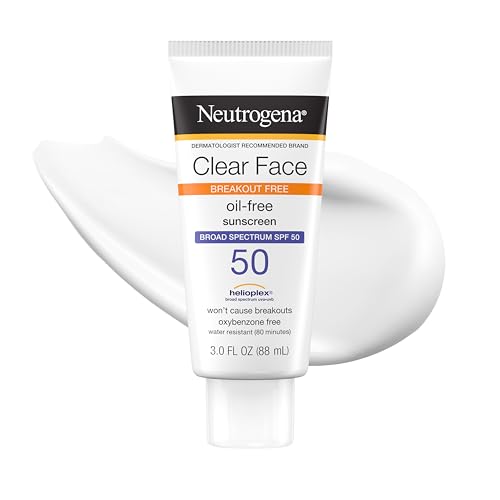
Seven picks compared on SPF number, size, texture and whether they treat scars or just shield them. Neutrogena Clear Face SPF 50 wins on the numbers that matter for daily wear.

By Corey DuncanUpdated 18 min read
On this page
- Best sunscreen for acne scars at a glance
- How I narrowed the field, and what got cut
- Why the SPF number isn't the deciding spec
- 1. Neutrogena Clear Face Sunscreen Lotion SPF 50 — Best overall
- 2. CeraVe Invisible Mineral Sunscreen SPF 50 — Most versatile
- 3. La Roche-Posay Anthelios UV Control SPF 50 — Best premium
- 4. La Roche-Posay Anthelios Clear Skin SPF 60 — Best minimal setup
- 5. NewGel+ UV Medical-Grade Silicone Scar Cream SPF 30 — Best upgrade
- 6. MURASAKI BEAUTY 100% Silicone Scar Stick SPF 30 — Best large-capacity
- 7. Mederma Acne Scar Serum — Best for pros
- Sunscreen or scar treatment: which do you actually need?
- How long does one bottle last?
- What the listings don't tell you about acne scars
- The verdict
- FAQ
The best sunscreen for acne scars is Neutrogena Clear Face Sunscreen Lotion SPF 50, because it pairs a broad spectrum SPF 50 with a 3 fl oz bottle, the largest in this set, in an oil-free formula built for breakout-prone skin. If you need a mineral filter and a truly invisible finish on deeper skin tones, CeraVe Invisible Mineral SPF 50 at 1.62 fl oz is the pick instead. The deciding specification here isn't the SPF number. It's whether the formula is non-comedogenic and whether the bottle is big enough that you reapply.
Best sunscreen for acne scars at a glance
| Pick | SPF & filter type | Size | Price |
|---|---|---|---|
Best overall Neutrogena Clear Face Sunscreen Lotion SPF 50 |
SPF 50 oil-free, oxybenzone-free |
3 fl oz | Check Price |
Most versatile CeraVe Invisible Mineral Sunscreen SPF 50 |
SPF 50 mineral |
1.62 fl oz | Check Price |
Best premium La Roche-Posay Anthelios UV Control SPF 50 |
SPF 50 with azelaic acid |
1.7 fl oz | Check Price |
Best minimal setup La Roche-Posay Anthelios Clear Skin SPF 60 |
SPF 60 oil-absorbing, matte |
1.7 fl oz | Check Price |
Best upgrade NewGel+ UV Silicone Scar Cream SPF 30 |
SPF 30 zinc oxide + silicone |
0.53 oz | Check Price |
Best large-capacity MURASAKI BEAUTY Silicone Scar Stick SPF 30 |
SPF 30 silicone stick |
10g x 2 sticks | Check Price |
Best for pros Mederma Acne Scar Serum |
No SPF niacinamide serum |
1 fl oz | Check Price |



How I narrowed the field, and what got cut
I set three criteria before I looked at a single listing, and I weighted them in this order.
- Non-comedogenic status, weighted heaviest. A pore-clogging sunscreen creates the next round of marks while shielding the old ones. Four of these seven listings state non-comedogenic explicitly.
- Published SPF with broad spectrum coverage, weighted second. Post-acne marks darken under UV. Anything without a stated SPF figure had to earn its place another way.
- Bottle size and format, weighted third. A 0.53 oz cream and a 3 fl oz lotion are not competing for the same job, and pretending otherwise is how buyers end up disappointed.
Those weights come from how this category actually fails. People don't stop using sunscreen because the SPF was too low. They stop because it pilled under makeup, left a grey cast, or ran out in three weeks.
What that screening cut: body sunscreens sold in large bottles with no non-comedogenic claim, tinted formulas offered in a single shade, and anything whose listing published neither a size nor an SPF figure.
Two picks here are not sunscreens in the usual sense. The Mederma serum publishes no SPF at all, and I've kept it because a serious plan for marks usually runs a treatment at night and protection in the morning. I've labelled that clearly in its section so nobody buys it expecting UV coverage.
Why the SPF number isn't the deciding spec
Most guides to the best sunscreen for acne scars rank by SPF and stop there. That ranking would put La Roche-Posay Anthelios Clear Skin SPF 60 first and NewGel+ SPF 30 last. It's the wrong sort.
Here's what actually separates these seven. Between SPF 30 and SPF 60, the difference in filtered UVB is a matter of a few percentage points. The difference between a sunscreen you apply every morning and one you use twice then abandon is total. So the deciding criterion is wearability on skin that breaks out, and the two specifications that predict it are the non-comedogenic claim and the finish.
Look at how this set splits:
- Chemical, oil-free finishes: Neutrogena Clear Face and both La Roche-Posay picks. Fast absorption, no white cast, lighter under makeup.
- Mineral finish: CeraVe Invisible Mineral SPF 50, the only mineral face pick here, with a stated no-white-cast claim.
- Silicone scar formats: NewGel+ SPF 30 and MURASAKI BEAUTY SPF 30. These are occlusive by design, which is the point for a raised scar and a problem across a whole oily face.
- No SPF: the Mederma serum.
Size matters more than the SPF gap too. Neutrogena's 3 fl oz bottle is nearly double CeraVe's 1.62 fl oz. That's the difference between reapplying at lunch without flinching and rationing.
One more thing the number hides. Sun protection doesn't fade an existing mark. It stops the mark going darker while whatever you're actually using to fade it does its work. Judge these on how reliably they sit on your face every day, not on the digits.
1. Neutrogena Clear Face Sunscreen Lotion SPF 50 — Best overall
The largest bottle in this set paired with an oil-free SPF 50, which is exactly the combination that makes daily reapplication realistic.
Best for: oily, breakout-prone faces needing a daily SPF 50 you'll actually reapply Skip it if: you want a mineral-only filter
At 3 fl oz, this is the biggest face bottle here by a clear margin, and it's the cheapest of the seven. That pairing is unusual and it's why it wins. Neutrogena describes the Clear Face formula as non-comedogenic, oil-free and oxybenzone-free, and says it's water-resistant up to 80 minutes. The listing puts the broad spectrum rating at SPF 50 and positions the texture as lightweight enough to layer under other products.
The bottle measures 5.57 x 1.55 x 2.46 in and weighs 3.68 oz filled, so it's a bathroom-shelf size rather than a pocket size. Released in 2020, it also sells faster than every other pick here except the CeraVe, and only two sellers list it.
For marks left behind by past breakouts, the logic is simple. You need something you'll put on seven mornings a week for months, and generous volume at the lowest price in the set removes the main reason people skimp.
The trade-off against the field: it uses chemical filters, so if your skin reacts to those, CeraVe's mineral formula is the safer route. It also carries no scar-specific ingredient, which the two silicone picks and the Mederma serum do.
Pros:
- Largest face bottle here at 3 fl oz
- Cheapest of the seven picks
- Broad spectrum SPF 50, oil-free and oxybenzone-free
- Water-resistant up to 80 minutes per the listing
- Non-comedogenic claim for breakout-prone skin
Cons:
- Chemical filters, not mineral
- No scar-targeting ingredient in the formula
- Bulkier bottle than the 1.7 fl oz tubes
- Only two sellers list it
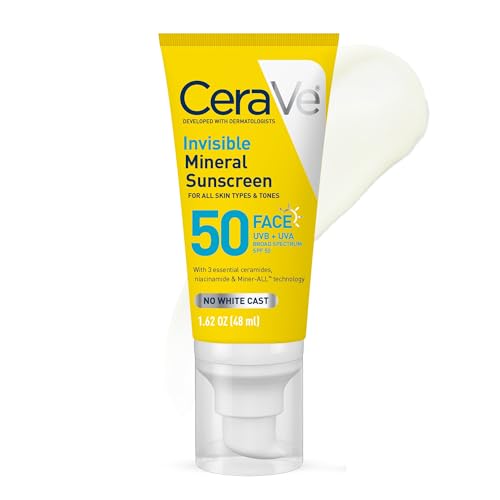
2. CeraVe Invisible Mineral Sunscreen SPF 50 — Most versatile
The only mineral face sunscreen in this group, and the one that makes an explicit invisible-finish claim across all skin tones.
Best for: deeper skin tones and anyone reactive to chemical filters Skip it if: you hate shaking a bottle before every use
Mineral sunscreens have a reputation for leaving a grey cast, which is a real problem when you're trying to even out post-acne marks rather than draw attention to them. CeraVe's answer is what the listing calls Miner-ALL technology, described as delivering a 100% invisible, weightless application on all skin tones and skin types. That's the claim; it's the reason this pick is here rather than a generic zinc lotion.
The formula is stated as fragrance-free, non-comedogenic and suitable for sensitive and acne-prone skin, with three ceramides and a claimed 24 hours of hydration. Broad spectrum coverage sits at SPF 50. The tube holds 1.62 fl oz, weighs 2.88 oz and measures 5.51 x 1.43 x 1.86 in.
This is the newest sunscreen here, released in 2025, and it's the one buyers choose most often across this set. It's also the second-cheapest.
The trade-offs: it holds roughly half the volume of the Neutrogena bottle for a slightly higher price position, and the listing instructs you to shake well before use, which mineral formulas usually need but not everyone remembers.
Pros:
- Only mineral face sunscreen in this comparison
- Invisible finish claimed for all skin tones
- Fragrance-free and non-comedogenic per the listing
- Three ceramides plus a 24-hour hydration claim
- Sells faster than any other pick here
Cons:
- 1.62 fl oz, roughly half the winner's volume
- Requires shaking before each application
- Newest listing here, released 2025, so less track record
- No scar-specific active
3. La Roche-Posay Anthelios UV Control SPF 50 — Best premium
The only pick that puts azelaic acid in the same tube as the SPF, which matters if redness is your main complaint.

Best for: redness-prone skin that also wants azelaic acid in the same step Skip it if: you're buying on price or want a bigger bottle
This is the most expensive pick here, and the reason is the formula rather than the size. The listing describes a non-comedogenic SPF 50 with azelaic acid for acne-prone and rosacea-prone skin, plus a barely-there texture said to blend invisibly into all skin tones. It's oxybenzone-free and octinoxate-free, and the listing states the usual broad spectrum benefit of reducing skin cancer and early ageing risk when used with other sun measures.
Practically, that combination collapses two steps into one. If you're already reaching for an azelaic acid product in the morning, this covers both jobs from a single 1.7 fl oz tube measuring 5.9 x 1.5 x 1.5 in. Released in 2024, it's the second-newest listing in the group.
Where it falls short of the winner: you're paying the highest price in this set for 1.7 fl oz against Neutrogena's 3 fl oz, and the published SPF is identical at 50. The listing also doesn't publish a filled weight, which makes it harder to compare directly against the other tubes.
Pros:
- Only pick pairing SPF 50 with azelaic acid
- Non-comedogenic, stated for acne- and rosacea-prone skin
- Oxybenzone-free and octinoxate-free
- Invisible blend claimed across all skin tones
Cons:
- Most expensive pick in this set
- 1.7 fl oz against the winner's 3 fl oz
- Same SPF 50 as two cheaper picks here
- No published weight figure on the listing
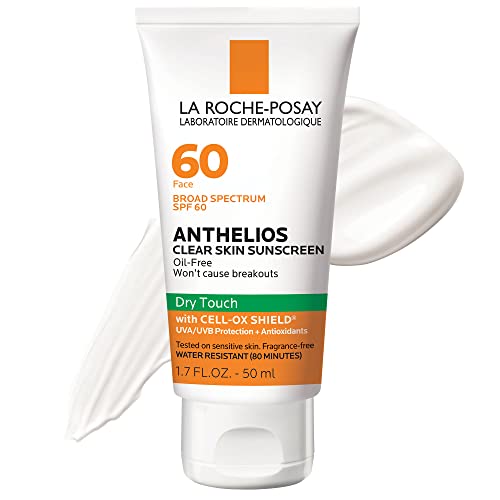
4. La Roche-Posay Anthelios Clear Skin SPF 60 — Best minimal setup
The highest published SPF here at 60, in a matte formula the brand says absorbs pore-clogging oil.
Best for: shiny skin in heat and humidity that wants one matte step Skip it if: you need the highest published SPF in a mineral formula
If your skin goes slick by mid-morning and that shine draws the eye straight to uneven texture, this is the pick that addresses it directly. La Roche-Posay states SPF 60 broad spectrum coverage and says the sunscreen absorbs pore-clogging oil even in heat and humidity, using what the listing calls Cell-Ox Shield antioxidant technology. The finish is described as matte.
The exclusion list is the longest of any pick here: oxybenzone-free, octinoxate-free, fragrance-free, allergy-tested, oil-free and paraben-free, with a non-comedogenic claim for sensitive skin. That's useful when you're already running actives and don't want another variable.
The tube holds 1.7 fl oz, weighs 2.4 oz and is the most compact face format in the set at 1 x 1.75 x 1.5 in, so it travels well. It's been on the shelf since 2015, model S20011, which is the longest run of anything here.
Against the winner, the maths is uncomfortable. You get 10 extra SPF points and 1.3 fewer fluid ounces at a higher price position. The mattifying finish also reads flat under some makeup, which is a texture preference rather than a flaw.
Pros:
- Highest published SPF in this set at 60
- Matte finish with an oil-absorbing claim
- Longest exclusion list here, including fragrance and parabens
- Most compact face tube at 1 x 1.75 x 1.5 in
Cons:
- 1.7 fl oz, well under the winner's volume
- Chemical filters only, no mineral option
- Matte finish can look flat under some makeup
- Oldest formula here, dating to 2015
5. NewGel+ UV Medical-Grade Silicone Scar Cream SPF 30 — Best upgrade
Medical-grade silicone and zinc oxide SPF 30 in one 0.53 oz tube, built for a specific scar rather than a whole face.

Best for: one or two raised scars you're treating and shielding at once Skip it if: you need full-face coverage
This is the pick for a targeted problem. The listing describes the same silicone scar formulation as the original NewGel+ with zinc oxide added for broad spectrum SPF 30 mineral protection and skin protectant properties. It's positioned for scars old and new on arms, hands and face, and the brand says it helps prevent darkening of scars from UV exposure and is ideal for facial blemish scars.
Beyond the silicone, the formula is stated as free of parabens, fragrances and preservatives, plus gluten-free and non-comedogenic. The listing also says it relieves discomfort and itching associated with scars.
Size sets the boundary. At 0.53 oz and 15 g, in a tube measuring 1.26 x 4.45 x 1.26 in, this covers a mark or two, not a face. It's the second most expensive pick here and the smallest quantity by a wide margin, which is normal for scar-specific products but worth saying plainly.
The trade-off: SPF 30 is the lowest sun rating of the five picks that publish one, and the tube is far too small to use as your daily face sunscreen. Pair it with one of the top three, don't substitute it.
Pros:
- Medical-grade silicone plus zinc oxide SPF 30 in one step
- Non-comedogenic, no parabens, fragrance or preservatives
- Claimed to help prevent UV darkening of scars
- Small tube travels easily for spot reapplication
Cons:
- Only 0.53 oz, the smallest quantity here
- SPF 30, the lowest published rating of the sunscreen picks
- Second most expensive pick despite the tiny size
- Not viable as full-face coverage
6. MURASAKI BEAUTY 100% Silicone Scar Stick SPF 30 — Best large-capacity
Two sticks in the box, which is the most generous quantity of any scar-specific pick here.

Best for: spot-treating scars on the body with a mess-free stick Skip it if: you want published weight and dimension figures
The format is the argument. This ships as 10g x 2 sticks, so you get two units where every other pick here gives you one, and the listing describes the applicator gliding on smoothly with no messy application. That matters for scars on arms, shoulders or a C-section line, where squeezing cream from a tube one-handed is genuinely awkward.
MURASAKI BEAUTY combines medical-grade silicone with broad spectrum SPF 30 and lists Vitamin E, meadowfoam seed oil, jojoba oil, olive oil, coconut oil and chamomile oil alongside it. The stated range covers surgical scars, C-section scars, burns, injury marks, stretch marks, acne marks and hypertrophic scars, old and new. The directions say to apply over clean, closed skin before daytime activities.
It sits mid-range for this set on price, sold in purple packaging, and it's the slowest-selling pick of the seven.
The trade-offs are real. The listing publishes no weight or dimensions beyond the 10g stick size, so you're buying with less specification detail than any other pick. The plant oil blend also makes it a poor candidate for a full oily face, and SPF 30 is on the low end here.
Pros:
- Two 10g sticks per box, twice the units of any other pick
- Mess-free stick applicator for body scars
- Silicone plus Vitamin E and several plant oils
- Broad spectrum SPF 30 in a travel-friendly format
Cons:
- No published weight or dimension figures
- Slowest-selling pick in this set
- Oil-rich blend unsuited to full-face use on oily skin
- SPF 30, tied for the lowest here
7. Mederma Acne Scar Serum — Best for pros
A niacinamide serum aimed squarely at acne scars, with no SPF at all, so it belongs in your night routine.

Best for: an eight-week night routine layered under a separate morning SPF Skip it if: you expected this to protect you from UV
Every other pick here shields. This one is the only pick formulated to work on the marks themselves. Mederma calls it a triple-action formula with niacinamide, tetrapeptide-30 and polyhydroxy acid, designed to reduce the appearance of acne scars, and says it targets redness, texture and hydration while helping flatten scars. The stated protocol is twice daily, morning and night, on clean skin for eight weeks.
The bottle holds 1 fl oz, weighs 3.68 oz and measures 1.5 x 4.76 x 1.57 in. The serum is clear, described as non-staining and not sticky, and the listing notes it's HSA and FSA eligible. It's the second-newest release here, dated 2026.
I've placed it last deliberately, and the reason is the one thing that must be said out loud: it publishes no SPF. Used alone in daylight, it does nothing to stop UV deepening the very marks it's meant to fade. Buy it as the treatment half of a pair, with the Neutrogena or CeraVe handling mornings.
Against the field, it's also the second-slowest seller and carries a premium price for 1 fl oz.
Pros:
- Only pick formulated specifically to treat acne scars
- Niacinamide, tetrapeptide-30 and polyhydroxy acid combined
- Clear, non-staining serum per the listing
- HSA and FSA eligible
Cons:
- No SPF, so it cannot replace a sunscreen
- Needs a second product to be used safely in daylight
- Eight-week commitment before judging results
- Premium price for a 1 fl oz bottle
Sunscreen or scar treatment: which do you actually need?
This set contains two different kinds of product, and buying the wrong kind is the most common mistake in this category. Here's the split, plainly.
Buy a face sunscreen if your concern is flat brown or red marks across your cheeks, forehead or jaw after breakouts have healed. Neutrogena Clear Face, CeraVe Invisible Mineral, Anthelios UV Control and Anthelios Clear Skin all cover a full face and all publish a non-comedogenic claim.
Buy a silicone scar product if you have one or two raised or indented scars with a defined edge. NewGel+ and the MURASAKI BEAUTY stick both combine silicone with SPF 30. Neither covers a face.
Buy a serum if you want an active working on the marks overnight. The Mederma serum is the only pick in that role, and it must be paired with a sunscreen.
A word on the keyword itself. Amazon's results for the best sunscreen for acne scars mix all three formats, and none of these listings claims to erase a scar with sun protection alone. Sun protection is defensive: it keeps marks from darkening. Fading them is a separate job that needs a separate active, which is why the Mederma pick is in this lineup at all.
If you're buying one product only, buy the sunscreen. It's the step that stops the problem getting worse.
How long does one bottle last?
Volume is the specification nobody compares and everybody regrets. Line the face picks up:
- Neutrogena Clear Face: 3 fl oz
- Anthelios Clear Skin: 1.7 fl oz
- Anthelios UV Control: 1.7 fl oz
- CeraVe Invisible Mineral: 1.62 fl oz
The winner holds nearly double the smallest. If you apply generously each morning and reapply once during the day, which is what sun protection actually requires, a 1.62 fl oz tube empties fast and a 3 fl oz bottle doesn't. That gap is the practical case for Neutrogena over CeraVe, and it's why the cheapest pick here is also the one I'd default to.
Scar formats work on a different scale entirely. NewGel+ gives you 0.53 oz, or 15 g, and MURASAKI BEAUTY gives you 10g x 2 sticks. Both are meant to cover a coin-sized area, not a face, so they last far longer than the numbers suggest.
One habit worth adopting. Keep the compact tube in a bag and the big bottle at home. The Anthelios Clear Skin tube measures 1 x 1.75 x 1.5 in, the smallest footprint here, which makes it the natural travel companion to a full-size bottle on the shelf.
What the listings don't tell you about acne scars
Three things these product pages leave out, and they change how you should shop.
"Non-comedogenic" isn't a regulated grade. Four of these listings use the term. It reflects the manufacturer's own testing, not a standard you can compare across brands. Treat it as a signal that the formula was designed with clogged pores in mind, then judge your own skin over two weeks.
Mark type isn't stated anywhere. Flat red or brown marks behave differently from raised or pitted scars, and no listing here distinguishes between them. That's your call to make before you buy, and it's the difference between choosing a face sunscreen and choosing a silicone stick.
Water resistance is only claimed once. Neutrogena states water resistance up to 80 minutes. The other sunscreen picks publish no water-resistance figure at all, so if you sweat through workouts, that single claim is meaningful.
The pattern across the whole set is worth noting too. Only two of the seven picks specify their filter type, mineral for CeraVe and zinc oxide for NewGel+. If your skin has reacted to a chemical filter before, that narrows the best sunscreen for acne scars to a very short list, and CeraVe is the only full-face option on it.
The verdict
Three tiers, three answers.
At the entry level, Neutrogena Clear Face SPF 50 is the pick and the overall winner. It's the cheapest of the seven, it holds 3 fl oz where the next-largest face pick holds 1.7, and it publishes the only water-resistance figure here at 80 minutes. Non-comedogenic, oil-free, oxybenzone-free, broad spectrum SPF 50. For daily protection on skin that's already marked, nothing in this set is easier to keep using. CeraVe Invisible Mineral SPF 50 is the entry-tier alternative and the one to buy if you need a mineral filter, since it's the only face pick that provides one and the only one claiming a fully invisible finish on all skin tones.
In the middle, MURASAKI BEAUTY's SPF 30 stick earns its place on format alone. Two 10g sticks and a mess-free applicator make it the practical choice for scars on the body, though its published specifications are the thinnest here.
At the premium end, Anthelios UV Control SPF 50 is worth the step up only for one reason: it's the sole pick combining sun protection with azelaic acid, which collapses two morning steps into one. If redness is your main complaint, that's a genuine advantage. If it isn't, you're paying the highest price in this set for the same SPF 50 and roughly half the volume of the winner.
FAQ
Is the best sunscreen for acne scars worth buying if the marks are old?
The best sunscreen for acne scars is worth buying regardless of how old the marks are, because UV exposure deepens existing pigmentation. NewGel+ states its zinc oxide formula helps prevent darkening of scars due to sun exposure, old and new. Protection won't fade what's there, but it stops months of gradual worsening while a treatment product does the fading work.
Which is cheaper to run day to day, Neutrogena or CeraVe?
Cheaper to run day to day is Neutrogena Clear Face. It's the lowest price position in this set and holds 3 fl oz against CeraVe's 1.62 fl oz, so you get roughly double the volume for less. CeraVe's advantage isn't cost, it's the mineral filter and the invisible-finish claim across all skin tones. Choose CeraVe for skin sensitivity, Neutrogena for value.
Does a higher SPF number mean better protection for acne scars?
A higher SPF number gives marginally more UVB filtering, but it isn't what decides results here. Anthelios Clear Skin publishes SPF 60, the highest in this set, while the winner publishes SPF 50. The gap in filtered UVB between those two is small. Consistent daily application in a non-comedogenic formula matters far more than ten SPF points.
Can I use a silicone scar stick on my whole face?
Using a silicone scar stick on your whole face isn't the intended use. MURASAKI BEAUTY ships 10g x 2 sticks and NewGel+ holds 0.53 oz, quantities meant for a defined scar area. Both include occlusive silicone plus, in MURASAKI's case, several plant oils. On a full oily face, that's a lot of occlusion. Use a face sunscreen for coverage and reserve the stick for specific marks.
What's the most common mistake when buying sunscreen for acne scars?
The most common mistake when buying sunscreen for acne scars is expecting the SPF product to fade the marks. It won't. The Mederma serum is the only pick here formulated to treat scars, with niacinamide and polyhydroxy acid over an eight-week course, and it publishes no SPF at all. Fading and protecting are two jobs. Plan for both.
Start with the Neutrogena Clear Face SPF 50 bottle and get it onto your face every morning for a month before you change anything else. That's the unglamorous part of dealing with acne scars, and it's the part that decides whether the marks lighten or hold. Three fluid ounces at the lowest price in this set removes every excuse for going light on application, which is the single habit that undoes most people. Once the sun protection is automatic, add the Mederma serum at night if you want the marks actively worked on. Protection first, treatment second, in that order.