Best Urea Foot Cream by Strength and Skin Barrier

Seven urea foot creams compared by concentration, size and barrier ingredients. A clear winner for aging skin, plus when a higher-strength jar is the smarter buy.

By Corey DuncanUpdated 16 min read
On this page
- Best urea foot cream for anti aging at a glance
- How I screened seven urea foot creams
- 1. Ebanel Urea Cream 40% plus Salicylic Acid 2% — Best overall
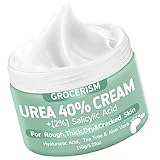
- 2. Grocerism Urea Cream 40% for Feet — Best for families
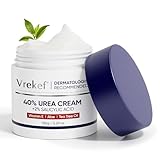
- 3. VREKEF Urea Cream 40 Percent with 2 Percent Salicylic Acid — Runner-up
- 4. Clyecfra 60% Urea Cream for Feet with 2% Salicylic Acid — Best for heavy use
- 5. OUKEYA 40 Percent Urea Cream Hand Foot Cream — Best large-capacity
- 6. QJCWXIAOX 60% Urea with 2% Salicylic Acid Foot Care Stick — Best for beginners
- 7. SKIN ULTIMA Urea Cream 40 Percent Plus 2% Salicylic Acid — Best budget pick
- Does urea foot cream actually do anything for aging skin?
- 40% urea or 60% urea: which is right for you?
- What the listings do not tell you about anti-aging claims
- How long does a jar actually last?
- The verdict
- FAQ
The best urea foot cream for anti aging in this set is Ebanel's 40% Urea Cream with 2% Salicylic Acid, a 4.6 oz jar that pairs the exfoliating acid with a botanical blend built around Vitamin E and Green Tea Extract. If you want the same active pair in a larger 5.29 oz jar with hyaluronic acid and ceramide added, the Grocerism cream is the smarter buy. Skip a bad pick and you get a jar of greasy filler that sits on top of a cracked heel and does nothing.
Best urea foot cream for anti aging at a glance
| Pick | Urea + acid | Size | Price |
|---|---|---|---|
Best overall Ebanel Urea Cream 40% plus Salicylic Acid 2% |
40% + 2% | 4.6 oz | Check Price |
Best for families Grocerism Urea Cream 40% for Feet |
40% + 2% | 5.29 oz | Check Price |
Runner-up VREKEF Urea Cream 40 Percent |
40% label, 60% claim + 2% |
5.29 oz | Check Price |
Best for heavy use Clyecfra 60% Urea Cream for Feet |
60% + 2% | 5.29 oz | Check Price |
Best large-capacity OUKEYA 40 Percent Urea Cream |
40% claim | 5.29 oz | Check Price |
Best for beginners QJCWXIAOX 60% Urea Foot Stick |
60% + 2% | 1.41 fl oz stick | Check Price |
Best budget pick SKIN ULTIMA Urea Cream 40 Percent |
40% + 2% | 5.29 oz | Check Price |



How I screened seven urea foot creams
I started with the shortlist of urea foot creams that Amazon surfaces for the anti-aging modifier, then pulled every specification the listings actually publish: concentration of urea, presence of salicylic acid, jar size, dimensions, and the secondary ingredients each brand highlights. The category is small and repetitive, and most of the differences that matter are on the label, not in the marketing.
Three things drove the ranking:
- The concentration of urea, and whether salicylic acid is stacked with it. A 40% urea plus 2% salicylic acid pairing is the workhorse combination for callus softening.
- The size of the jar, because urea creams get used every day on both feet, and a 4.6 oz jar and a 5.29 oz jar wear through at different rates.
- The secondary ingredients that touch on aging skin: humectants, antioxidants, and barrier lipids. This is where the picks separate.
I cut anything without a stated urea concentration, and I flagged one listing where the label and the feature copy disagree on the urea figure. Warranties are almost entirely absent in this category: only one of the seven picks publishes one.
1. Ebanel Urea Cream 40% plus Salicylic Acid 2% — Best overall
Ebanel is the best urea foot cream for anti aging concerns in this set because it stacks a 40% urea plus 2% salicylic acid pair with the widest published antioxidant blend.
Best for: aging feet with cracked heels and thinning skin around the edges Skip it if: you want a jar bigger than 4.6 oz
Ebanel is the only pick in this set with a published warranty, a 90-day manufacturer warranty from the date of purchase, and it's the only one that names a released year (2024) and a model number (E-UC-4oz). The 4.6 oz jar is the smallest of the six creams here, but the ingredient list is the most relevant to older skin: Ebanel says the formula pairs 40% urea and 2% salicylic acid with Tea Tree Oil, Green Tea Extract, Aloe Vera, Allantoin, Vitamin E and botanical oils. Green tea and Vitamin E are the two antioxidants most often cited on aging skin. Ebanel also says the cream is made in a US FDA-registered, cGMP-certified facility, is dermatologist tested, hypoallergenic and noncomedogenic, and is free from parabens, formaldehyde, talc, SLS and SLES.
The trade-off is size. At 4.6 oz, this jar is smaller than every other cream here, so a whole-foot user working on both heels will finish it faster than the 5.29 oz alternatives.
Pros:
- 40% urea plus 2% salicylic acid on the label
- Antioxidant blend with Green Tea Extract and Vitamin E
- 90-day manufacturer warranty, unique in this set
- Made in a US FDA-registered, cGMP-certified facility
- Free from parabens, formaldehyde, talc, SLS and SLES
Cons:
- Smallest jar in the set at 4.6 oz
- The most expensive pick here
- No fragrance-free version listed
2. Grocerism Urea Cream 40% for Feet — Best for families
Grocerism is the pick for a household that treats hands, elbows and heels from one jar, because its ingredient list adds hyaluronic acid and a ceramide to the 40% urea plus 2% salicylic acid pair.

Best for: households treating hands, elbows and heels from one jar Skip it if: you want a published warranty
Grocerism gives you the same 40% urea plus 2% salicylic acid pair as the winner in a bigger 5.29 oz jar, and layers in an ingredient list that reads unusually well for aging skin: Grocerism says the moisturising blend is built on hyaluronic acid, aloe vera extract, tea tree leaf extract, glycerin, allantoin, bisabolol and a ceramide. Hyaluronic acid is the classic humectant for thinning skin, and a ceramide is the barrier lipid your feet lose fastest with age. The brand positions the cream for multi-area use, saying it can go on heels, hands, elbows, knees, ankles and legs, which is what you want if one jar is servicing three sets of feet.
The clean-formula claim is on the label too: Grocerism says the cream is made without parabens or sulfates and is not tested on animals. Against Ebanel it loses the published warranty and the released year, and there is no model number, only the internal code UreaCream-1.
Pros:
- 40% urea plus 2% salicylic acid in a 5.29 oz jar
- Ingredient list names hyaluronic acid and a ceramide
- Multi-area use on hands, elbows, knees and legs
- Made without parabens or sulfates per the listing
Cons:
- No warranty published
- No released year or independent testing claim
- Mid-price for the set
3. VREKEF Urea Cream 40 Percent with 2 Percent Salicylic Acid — Runner-up
VREKEF earns runner-up on paper because it's the entry-priced 5.29 oz pick with a published Glycerin, Shea Butter and Vitamin E blend, but its own listing disagrees with itself on the urea figure.

Best for: thick calluses that need a higher-strength formula Skip it if: the label's mixed urea figures put you off
VREKEF is the only tube in this set, at 5.8 x 1.4 x 2.5 in and 5.29 oz, and the third-cheapest of the seven picks. The listing name is Urea Cream 40 Percent with 2 Percent Salicylic Acid, but the feature copy says the cream is made with 60 Percent Urea and Salicylic Acid. You cannot know from the listing alone which figure is on the tube. I've flagged this because in a category where the concentration is the whole point, an internal disagreement matters, and it's the honest answer whether you buy this one or not.
If you take the ingredient blend at face value, VREKEF says the formula adds Glycerin, Aloe Vera Leaf Extract, Shea Butter, Tea Tree Oil and Vitamin E to the acid pair. That's a reasonable stack for older skin: Shea Butter is an occlusive, Glycerin is a humectant, and Vitamin E is an antioxidant. The tube format also travels better than a screw-top jar.
Pros:
- Entry-priced pick in the 5.29 oz size class
- Ingredient list names Shea Butter and Vitamin E
- Tube format is more portable than a jar
- Sits in the second-fastest sales rank tier here
Cons:
- Listing name says 40%, feature copy says 60%
- No warranty published
- No third-party testing claim
4. Clyecfra 60% Urea Cream for Feet with 2% Salicylic Acid — Best for heavy use
Clyecfra is the right choice for long-standing calluses because it publishes a 60% urea plus 2% salicylic acid pair in a 5.29 oz jar and describes the texture as light rather than thick.

Best for: long-standing calluses on very dry heels Skip it if: you have sensitive skin around the ankles
At 60% urea, Clyecfra sits at the top of the concentration curve in this set alongside the QJCWXIAOX stick. Urea at 40% works as a strong humectant that draws water into the corneum; at 60% urea it also digests hardened keratin more aggressively, which is what you want on a callus that has been building for years. Clyecfra says the cream is suitable for people of all skin types, especially dry and extremely dry skin, and describes the texture as light and delicate, smooth and easy to apply, without a thick greasy feel.
The dimensions are 2.71 x 2.71 x 2.44 in and the shipping weight is 6.74 oz for the 5.29 oz of product. What Clyecfra doesn't publish is the antioxidant story: no Vitamin E, no green tea, no ceramide is named in the feature copy. If your priority is the aging-skin ingredient list rather than the callus-softening power, the 40% picks are the better read.
Pros:
- 60% urea plus 2% salicylic acid on the label
- 5.29 oz jar, standard size for the set
- Listing describes the texture as light, not greasy
- Positioned for extremely dry skin
Cons:
- No antioxidants or ceramide named
- No warranty published
- One of the slower-moving picks by sales rank
5. OUKEYA 40 Percent Urea Cream Hand Foot Cream — Best large-capacity
OUKEYA is a plain 40% urea cream in a 5.29 oz jar, positioned as a straightforward everyday moisturiser rather than an ingredient-led anti-aging formula.

Best for: daily whole-foot application over months Skip it if: you want a published warranty or clean-formula claims
OUKEYA delivers the standard 5.29 oz jar at 2.76 x 2.76 x 2.56 in, and the listing keeps the message simple: 40% urea, dermatologist-tested, non-greasy, absorbs instantly. The brand says you'll see a difference after one week and clearly visible effects after two weeks of continued use, which is the manufacturer's claim rather than a tested result. OUKEYA does not publish a salicylic acid figure, so this is a pure-urea pick in a category where most of the competition pairs the urea with 2% salicylic acid.
For the anti-aging angle, OUKEYA is the plainest ingredient list here. There is no named antioxidant, no ceramide, no hyaluronic acid. If you want a large-capacity urea jar and you already use a separate serum for the aging-skin work, this is a fine buy. If you want the urea cream to carry both jobs, one of the top three picks does more with the same ounce count.
Pros:
- 5.29 oz jar for extended daily use
- Dermatologist-tested per the listing
- Positioned as non-greasy and fast-absorbing
- Second-most expensive slot without matching the winner's spec sheet
Cons:
- No salicylic acid published on the label
- No named antioxidants or ceramide
- No warranty or released year
6. QJCWXIAOX 60% Urea with 2% Salicylic Acid Foot Care Stick — Best for beginners
QJCWXIAOX is a 1.41 fl oz solid stick rather than a jar, which is the least intimidating way to try a 60% urea plus 2% salicylic acid formula for the first time.

Best for: spot-treating heels without a jar in the bathroom Skip it if: you need to cover both feet and hands
The stick format is the differentiator. QJCWXIAOX says the solid stick design is clean and hygienic, applied directly to the skin without scooping from a jar, and precise on the small areas that need it, the back of the heel, the ball of the foot, the side of the big toe. At 1.41 fl oz it's the smallest capacity here by a wide margin, and it's the second-cheapest pick, which makes it a low-commitment way to see whether a 60% formulation suits your skin before you commit to a full jar.
QJCWXIAOX describes the formula as light and non-greasy, absorbs quickly, and suitable for sensitive skin, and calls out use on knees, elbows and hands as well as feet. What's missing is the anti-aging ingredient story: no antioxidants or ceramides are named in the feature copy. Use this as a targeted callus tool, not as your all-over moisturiser.
Pros:
- Portable solid stick with no jar to open
- 60% urea plus 2% salicylic acid on the label
- Second-cheapest option in this set
- Positioned for sensitive skin
Cons:
- Only 1.41 fl oz of product
- No antioxidants or ceramide named
- Not built for whole-foot or family use
7. SKIN ULTIMA Urea Cream 40 Percent Plus 2% Salicylic Acid — Best budget pick
SKIN ULTIMA is the cheapest pick in this set and publishes a 40% urea plus 2% salicylic acid pair alongside a Tea Tree Oil, Peppermint, Olive Oil, Lavender and Chamomile blend.

Best for: a first jar to see if 40% urea suits your skin Skip it if: you want the fastest-moving option in this set
SKIN ULTIMA covers the important label figures, 40% urea plus 2% salicylic acid, in the standard 5.29 oz jar. The dimensions run 2.75 x 3.22 x 3.22 in, slightly squatter than the other 5.29 oz picks. On ingredients the brand names Tea Tree Oil, Peppermint, Olive Oil, Lavender and Chamomile, and says the cream is formulated and produced in an FDA-registered, cGMP-certified facility, verified by third-party labs, and is hypoallergenic. For a budget pick, that third-party testing claim is a genuine point of difference.
The signal to be honest about is the sales rank: SKIN ULTIMA sits at 8691 in the foot creams category, the slowest of the seven picks here by a wide margin. Every other cream in this comparison is under 2600. That may reflect price positioning, or newer listing age, or simply that shoppers are not finding it. As a first jar for someone testing whether 40% urea agrees with their skin, it's the low-risk choice.
Pros:
- Cheapest option in this comparison
- 40% urea plus 2% salicylic acid published
- Third-party lab testing claim on the listing
- Made in an FDA-registered, cGMP-certified facility
Cons:
- Slowest sales rank of the seven picks
- No warranty or released year published
- Peppermint and lavender may not suit fragrance-sensitive skin
Does urea foot cream actually do anything for aging skin?
Here is where you have to be honest with yourself. The word "anti aging" is doing a lot of work on Amazon, and the search result you clicked on didn't hold every listing to it. Amazon's own results treat the modifier loosely, so the picks here are not creams that have been proven to reverse wrinkles on your feet. They are urea creams that shoppers looking for aging-skin help commonly buy, which is a different promise.
What urea and salicylic acid actually do on older feet is worth spelling out:
- Urea at 40% acts as a strong humectant, drawing water into the outer layer of skin.
- Urea at 60% adds a keratolytic effect, breaking down the hardened dead skin that builds up as circulation and cell turnover slow with age.
- Salicylic acid at 2% loosens the bonds between dead cells at the surface, which is what smooths flaky, papery texture.
That is a real effect on aging feet, and it is different from the plumping and pigment claims skincare uses on the face. Treat urea foot cream as a texture and barrier tool, and the picks in this set earn their place.
40% urea or 60% urea: which is right for you?
The cutoff is texture. Below cracked heels and thick calluses, 40% urea is enough, and the ingredient list around the urea matters more than pushing the concentration higher. Above cracked heels and thick calluses, 60% urea does work 40% cannot, and the trade-off is that the extra strength can feel sharp on thin skin around the ankles or between the toes.
Reach for 40% urea when:
- Your feet are dry and rough but not deeply cracked.
- You want the cream to carry humectants and antioxidants for older skin.
- You'll use it every day on hands and elbows too.
Reach for 60% urea when:
- You have visible cracks on the heel that catch on socks.
- Calluses have been building for years without a callus-softening routine.
- You want the fastest visible smoothing over a two-week window.
Ebanel and Grocerism are the strongest 40% picks. Clyecfra and QJCWXIAOX are the 60% options here.
What the listings do not tell you about anti-aging claims
None of these listings publishes clinical evidence for anti-aging outcomes on foot skin. What they publish is ingredient lists and manufacturer positioning, and that's the material you have to work with. Two gaps are worth naming.
First, "dermatologist tested" and "dermatologist recommended" are marketing terms with no standardised definition. Ebanel, OUKEYA, VREKEF and SKIN ULTIMA all use one or the other, and none of them names a dermatologist or a study. Take the phrase as a signal the brand knows the category, not as proof.
Second, the antioxidant and barrier ingredients that matter for aging skin, hyaluronic acid, ceramides, Vitamin E, green tea, are almost always at concentrations too low to declare, and only Grocerism and Ebanel name enough of them to make a legible anti-aging pitch. If the ingredient list on a jar you're eyeing names only the urea and the salicylic acid, treat it as a callus cream and pair it with your regular moisturiser.
How long does a jar actually last?
A 5.29 oz jar covers roughly two months of nightly whole-foot use for one person, based on a pea-sized dose per foot. A 4.6 oz jar like Ebanel gets you closer to seven weeks on the same routine. The 1.41 fl oz QJCWXIAOX stick is a two-to-three-week tool if you use it every night on both heels, and much longer if you're spot-treating one problem area.
Two things shorten a jar faster than shoppers expect:
- Doubling up on hands and elbows, which most of these creams invite you to do.
- Sharing the jar in a household, which is why the family-sized 5.29 oz picks earn their place.
If you finish a 5.29 oz jar in under a month, you are almost certainly applying too much. Urea creams do not need to be layered thickly to work; a thin coat massaged in until absorbed is the routine every brand here describes.
The verdict
Ebanel is the best urea foot cream for anti aging concerns in this seven-cream comparison because it combines the workhorse 40% urea plus 2% salicylic acid pair with the most legible anti-aging ingredient list, Green Tea Extract, Vitamin E, Aloe Vera and Allantoin, and backs it with a 90-day manufacturer warranty that no other pick here publishes. It is also the only cream in this set with a published released year and a model number, which are the small signs of a brand that keeps its listing current.
The runner-up is Grocerism if you want the same 40% urea and 2% salicylic acid pair in a larger 5.29 oz jar with hyaluronic acid and a ceramide added to the blend. That combination reads better for households sharing a jar across hands, heels, elbows and knees, and it costs less than the winner. If you have hard, long-standing calluses rather than aging-skin concerns, step up to Clyecfra's 60% urea jar and pair it with a separate face-grade moisturiser for the anti-aging job. If you're testing the category for the first time, the QJCWXIAOX stick or the SKIN ULTIMA jar are the low-risk entries.
FAQ
Is urea foot cream worth it for older skin?
Urea foot cream is worth it for older skin when the problem is texture: dry, rough, cracked or callused feet. It does not plump wrinkles or lighten pigment, so if that is the goal, a face-grade cream is the better spend. For heel cracks, thickened soles and flaky forefoot skin that get worse with age, 40% urea plus 2% salicylic acid is the standard treatment.
What is the difference between 40% urea and 60% urea foot cream?
The difference between 40% urea and 60% urea foot cream is how aggressively the urea breaks down hardened skin. At 40%, urea acts mostly as a humectant, pulling water into the skin. At 60%, it also digests keratin, which is what smooths thick calluses. Higher is not always better: 60% can feel sharp on thin skin around the ankles and between the toes.
Ebanel or Grocerism: which urea foot cream should I choose?
Choose Ebanel if you want the strongest anti-aging ingredient list in this set, with Green Tea Extract and Vitamin E on the label, and a published 90-day manufacturer warranty. Choose Grocerism if you want the same 40% urea plus 2% salicylic acid pair in a larger 5.29 oz jar with hyaluronic acid and a ceramide added, and you are treating hands and elbows from the same jar.
Can I use urea foot cream on my hands and elbows?
You can use urea foot cream on your hands and elbows, and most of the picks here explicitly invite it. Grocerism names hands, elbows, knees, ankles and legs on its listing, and QJCWXIAOX's stick is positioned for knees and elbows too. The one caution is salicylic acid on very thin, dry skin: start with a smaller area for a few nights before you cover both hands.
How long does urea foot cream take to work?
Urea foot cream takes about one to two weeks to visibly soften rough heels with nightly use, and roughly four weeks to work through a thicker callus. OUKEYA says one week for a difference and two weeks for clearly visible effects, which matches the manufacturer story across this category. If you're seeing nothing after four weeks, either you're using too little or the callus is too thick for a 40% urea cream and you should step up to 60%.
Start with the concentration that matches your feet, not the marketing angle that caught your eye. Aging skin on the sole responds to the same urea and salicylic acid that softens a callus on a runner's heel, and the antioxidant blend on the label is the part that separates a texture cream from a texture-plus-barrier cream. Ebanel is the sensible default for anyone whose feet look thinner, drier and more papery than they used to, and the smaller 4.6 oz jar is easier to finish before it dries out at the rim. If you finish it and want to try a larger jar next, Grocerism is the natural step up, and by then you'll know exactly how your skin behaves under 40% urea.