Best Waterproof Loofah for Sensitive Skin: Silicone Wins
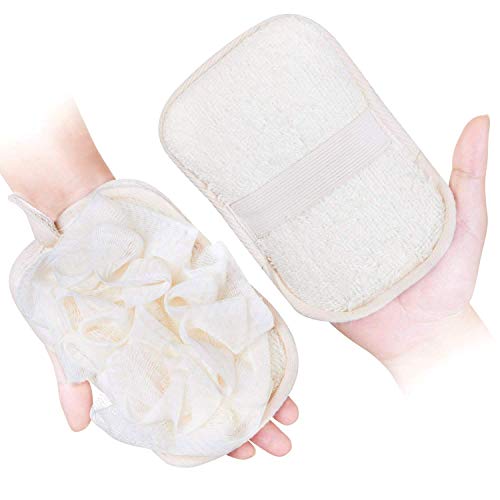
Five loofahs compared for delicate skin, from a 6.3-inch bath mitt to a silicone brush that dries between showers. The winner is a two-pack that changes the math.

By Corey DuncanUpdated 14 min read
On this page
- Best waterproof loofah for sensitive skin at a glance
- How I narrowed five picks from a crowded shelf
- What the word waterproof actually means here
- 1. mikimini Bath Loofah Sponge — Best overall
- 2. Avilana Premium Silicone Body Scrubber — Most versatile
- 3. Soarvita 2 Pack Silicone Body Scrubber — Best for families
- 4. Herbvian Natural Loofah Exfoliating Pads — Best compact
- 5. EcoTools Delicate EcoPouf Body Loofah — Best budget pick
- Silicone or netting: which is gentler on sensitive skin?
- How long should a loofah last before you toss it?
- What the listings do not tell you
- The verdict
- FAQ
The best waterproof loofah for sensitive skin is the mikimini Bath Loofah Sponge, a two-pack mitt measuring 4.33 x 0.79 x 6.3 in that pairs a soft fabric side with a lather-friendly loofah side. If you want a non-porous surface that dries between showers, the Avilana Premium Silicone Body Scrubber is the pick, at 4.8 oz with an SGS-certified food-grade silicone body the maker says is safe for face and body.
Best waterproof loofah for sensitive skin at a glance
| Pick | Material | Format | Price |
|---|---|---|---|
Best overall mikimini Bath Loofah Sponge |
PVC and fabric (maker's claim) |
Mitt, 2-pack | Check Price |
Most versatile Avilana Premium Silicone Body Scrubber |
Food-grade silicone (SGS claim) |
Dual-sided brush | Check Price |
Best for families Soarvita Silicone Body Scrubber |
Food-grade silicone (BPA-free claim) |
Dual-sided, 2-pack | Check Price |
Best compact Herbvian Natural Loofah Pads |
100% plant loofah | Flat pad, 2-pack | Check Price |
Best budget pick EcoTools Delicate EcoPouf |
100% recycled PE netting | Pouf, 1 count | Check Price |



How I narrowed five picks from a crowded shelf
I set three cuts before comparing anything. First, the deciding specification: the surface a shopper's skin actually touches. Sensitive skin punishes stiff synthetic mesh and unwashed sponge, so the picks had to declare their material clearly on the listing. Second, format: a loofah is not one shape. Poufs, pads, mitts and silicone brushes all show up under the same search, and each one washes differently.
Third, the listing had to say something concrete about gentleness. I cut anything that leaned on adjectives alone.
That left five picks in three families:
- Traditional fabric or netting: the EcoTools Delicate EcoPouf and the mikimini bath mitt.
- Plant loofah pads: the Herbvian scrubber, at 0.3 x 6.3 x 4.7 in.
- Silicone alternatives: the Soarvita two-pack and the Avilana single brush.
Three picks are explicitly marketed for sensitive skin in the listing copy: EcoTools, Soarvita and Avilana. Two are not marketed that way but sit in the same shopping consideration: mikimini leans on soft fabric on one side, Herbvian on a natural plant fibre. That mix is deliberate. If the reader only sees the poufs, the sensitive-skin question stops at fabric versus foam, and the more interesting split, netting versus silicone, never appears.
What the word waterproof actually means here
Here's the trick with the word waterproof. Every loofah gets wet. What varies is whether the material soaks up water and holds it between showers, which is where the trouble starts for delicate skin: a damp pouf becomes a place bacteria can breed and re-deposit on skin at the next wash.
- Netting and plant loofah absorb and hold water in their fibres. They need proper drying between uses and regular replacement.
- Silicone is non-porous, so water beads and runs off. Soarvita says its silicone "dries quickly and stays fresh between uses"; Avilana makes the same claim.
- The mikimini mitt combines both. The fabric side absorbs, the loofah side lathers, and the whole thing hangs on a string.
None of these picks is waterproof in the sense that it seals water out. What a shopper reading that qualifier really wants is a scrubber that does not stay damp for hours. On that criterion, silicone is the clearest answer here, and the reader has to judge for themselves whether they prefer the feel of silicone or of soft netting against the skin.
1. mikimini Bath Loofah Sponge — Best overall
A two-sided bath mitt that lets a shopper choose fabric or loofah at the moment they need it, sold in a two-pack.
Best for: delicate skin that reacts to stiff netting Skip it if: you prefer a non-porous silicone surface
The mikimini stands out in this set because it gives the reader two surfaces on one tool. The listing describes a bath mitt with a flat fabric side and a loofah side, made from PVC and fabric per the manufacturer, in the dimensions 4.33 x 0.79 x 6.3 in. On a day when skin is calm, the loofah side builds lather with body wash. On a day when skin is irritated, the fabric mitt does the cleaning without any exfoliation at all.
That flexibility matters for sensitive skin, where the right amount of scrub changes week to week. mikimini says the mitt is safe for all skin types and reduces allergies; treat that as the maker's claim rather than measured fact. The two-pack format lets a shopper rotate one while the other dries, which is the practical hygiene win here.
The trade-off is the shape. A mitt covers the hand, so it does not reach into the small of the back the way a long-handled brush does, and the fabric side takes longer to dry than silicone.
Pros:
- Two surfaces on one tool for gentle or firmer washes
- Two-pack lets you rotate while one dries
- Compact 6.3-inch length suits smaller hands
- Hangs on a cord between showers
Cons:
- Fabric side holds water longer than silicone
- Listed material is PVC, which some shoppers avoid
- No stated warranty or replacement guidance
- Priced at the top of this set
2. Avilana Premium Silicone Body Scrubber — Most versatile
A dual-sided silicone brush at 4.8 oz, with soft nubs on one side and gentle bristles on the other.

Best for: one tool for face and body with quick drying Skip it if: you want soft fabric on your skin
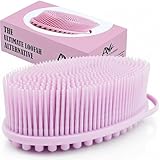
The Avilana is the only pick here with a full spec sheet: 4.8 oz, 1.73 x 5.75 x 3.12 in, in pink, model STYLE1. Avilana says the silicone is SGS-certified and food-grade; SGS is an independent inspection company, and the certification is the maker's stated claim. The design puts rounded nubs on one side for a soft massage and short bristles on the other for daily cleansing.
For sensitive skin, the pitch is straightforward. Silicone is non-porous, so it does not become the damp habitat a used pouf can. The bristles flex, which spreads pressure across the skin rather than concentrating it in a stiff thread of netting. Avilana specifically says the brush is gentle enough for face use, which no other pick here claims.
Against the other silicone in this set, the Avilana is the single unit with the fuller specification, in a palm-sized shape with a hanging loop. It sells faster than the rest of this set within its category. The trade-off is single-pack quantity: only one scrubber, where Soarvita gives two.
Pros:
- Fully specified with 4.8 oz weight and exact dimensions
- Silicone dries fast between showers
- Maker says it is safe for face and body
- Palm-sized ergonomic shape with hanging loop
- SGS-certified food-grade silicone per the listing
Cons:
- Single unit, so no rotation between showers
- Pink is the only listed colour
- Silicone feel is not for everyone
- No stated warranty period
3. Soarvita 2 Pack Silicone Body Scrubber — Best for families
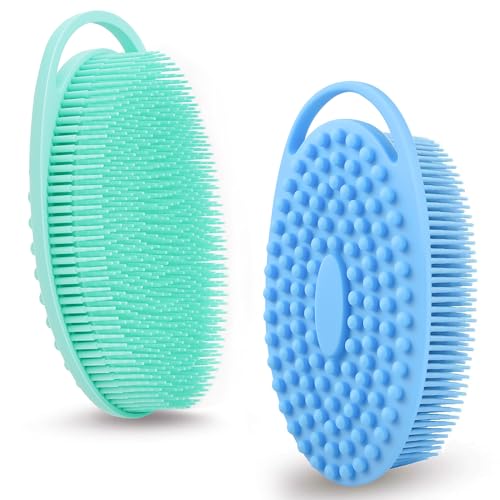
Two silicone scrubbers in blue and green, with a dual-texture design and food-grade material per the listing.
Best for: two people sharing a shower with separate scrubbers Skip it if: you need a single ergonomic handle
The Soarvita brings the two-pack format into the silicone category. The set is blue and green, both scrubbers with long flexible bristles on one side and a raised massage pattern on the other, in what the listing describes as BPA-free food-grade silicone. That answers the everyday problem of a shared bathroom where two people would otherwise pass the same pouf back and forth.
For sensitive skin, the case is the same as the Avilana's: non-porous silicone dries between showers, and soft flexible bristles are less abrasive than stiff synthetic netting. Soarvita adds a specific product claim, that the dense bristles create foam using up to 30% less body wash. Treat that as the maker's figure rather than a tested result, but the underlying point holds: silicone does not absorb the wash the way netting does.
The trade-off against Avilana is the missing spec sheet. Soarvita lists no weight and no dimensions, only the two colours and a count of 2. A shopper who wants to know the size before ordering is guessing.
Pros:
- Two scrubbers in one pack for a shared bathroom
- Cheaper than the Avilana on this list
- Silicone dries quickly between uses
- Two distinct colours to keep them separate
Cons:
- Listing shows no weight or dimensions
- Only one seller stocks it
- No hanging loop mentioned in the listing
- The 30% claim is not independently tested
4. Herbvian Natural Loofah Exfoliating Pads — Best compact
Flat plant-loofah pads at 0.3 x 6.3 x 4.7 in, in a two-pack with cotton loops.

Best for: travel bags and small shower caddies Skip it if: you dislike a firmer plant-based texture
The Herbvian is the flat pad of the set. At 0.3 x 6.3 x 4.7 in, it slides into a wash bag more easily than any pouf or mitt here. Herbvian says the material is 100% plant-based Vietnamese loofah, cut into oval pads with cotton hanging loops for drying. The listing notes the pads expand to about 2 inches thick when fully soaked, which is what makes the compact form work: flat when dry, fuller when wet.
For sensitive skin, natural loofah is a firmer surface than either silicone or netting. It exfoliates. The pack size, two pads, matters for hygiene: swap them out rather than letting one damp pad live in a caddy for weeks. Herbvian gives no stated replacement schedule, so use the same rule as any plant sponge and replace on the first sign of softness or discolouration.
Against the poufs, the Herbvian trades a soft feel for portability and a natural material. Against the silicones, it trades quick drying for the traditional loofah texture some shoppers specifically want.
Pros:
- Flattest profile at 0.3 in thick, easy to pack
- Two pads in the pack for rotation
- Plant-based material, no synthetics listed
- Cotton loop for hanging and drying
Cons:
- Plant loofah is firmer than silicone or netting
- No replacement guidance from the maker
- Not explicitly marketed as sensitive-skin
- Needs proper drying to avoid softening
5. EcoTools Delicate EcoPouf Body Loofah — Best budget pick
A traditional pouf in 100% recycled PE netting, the cheapest of the five.

Best for: a soft pouf you replace every few weeks Skip it if: you want a reusable non-porous surface
The EcoTools is the cheapest of the five and the most familiar shape: a round netting pouf, 6.69 x 5.51 x 5.51 in, in blue, made of 100% recycled PE netting per the listing. EcoTools describes it as designed for sensitive skin and made for gentle daily cleansing without over-exfoliating, and the brand carries a PETA cruelty-free note in the listing.
This is the entry-level buy in the set for the shopper who wants a familiar pouf and is happy to replace it often. The recycled-netting angle is genuine: the material is stated as 100% recycled PE, which matters more than the marketing claims around it. Sensitive skin does well with this softer netting versus stiffer supermarket poufs, but the underlying material is still absorbent and holds water between showers.
The trade-off against every other pick here is durability and hygiene. This is a single pouf, so there is no rotation option in the pack. Compared with the silicones, it does not dry as quickly. Compared with the mikimini mitt, it offers only one surface.
Pros:
- The cheapest pick in this set
- 100% recycled PE netting per the listing
- Explicitly marketed for sensitive skin
- Familiar shape, no learning curve
Cons:
- Only one pouf in the pack
- Absorbent netting stays damp longer than silicone
- Needs frequent replacement like any pouf
- No stated warranty or lifespan
Silicone or netting: which is gentler on sensitive skin?
The honest answer is that gentler depends on what irritates you. Netting is soft and squashable, so pressure spreads across a wide area. Silicone bristles are firmer at the tip, but the tips flex, and the material does not shed fibres.
Here is the practical split:
- If your skin reacts to friction, a soft mitt or pouf is the gentler feel.
- If your skin reacts to damp, mildewed material, silicone wins because it does not hold water.
- If you get both reactions, the mikimini is the pick because you get two surfaces and can rotate the two-pack.
Silicone is a loofah alternative, not a loofah in the botanical sense. Netting is not a loofah either, but the word covers both in everyday shopping.
Most shoppers miss the drying step. A scrubber that never fully dries is a scrubber that stops being gentle. Hang it, squeeze it, air it. On this criterion, silicone gives you the widest margin for a careless routine.
How long should a loofah last before you toss it?
None of the five listings states a lifespan. That is not a defect of the picks; no loofah brand gives a hard figure. The general rule is that netting and plant loofah are consumables. Silicone is not.
A useful framework, in the order a shopper actually experiences them:
- Netting pouf: replace on the first sign of unravelling or lasting smell.
- Plant loofah pad: replace when the fibres soften and no longer scrub.
- Silicone brush or scrubber: wash and keep until the material tears.
- Bath mitt: replace the pack when the fabric side stops rinsing clean.
The two-pack picks build in the answer. Herbvian gives you two pads. Soarvita gives you two silicone scrubbers. mikimini gives you two mitts. EcoTools gives you one pouf. Avilana gives you one silicone brush that should outlast every pouf in this comparison. That difference is what the price positions here actually buy.
What the listings do not tell you
Every listing in this set is quiet on the same three things.
- No stated warranty on any of the five. Not one of the specifications includes a warranty period. For consumables that is normal; for the silicone picks it is a small gap.
- No independent test data for the gentleness claims. "Made for sensitive skin", "gentle enough for face and body", "safe for all skin types" are the manufacturers' descriptions. They are useful signals of intent, not verified outcomes.
- Limited material detail. mikimini says PVC and fabric without naming the fabric. EcoTools names recycled PE. Herbvian names Vietnamese plant loofah. The silicones name food-grade silicone. That is the full picture for someone with a specific allergy to check.
In practice, the shopper's job is to match the material to their own skin, and the two-pack format is the low-risk way to try one without committing to a single unit.
The verdict
The mikimini Bath Loofah Sponge is the winner in a set with five real choices, and it wins because it does two jobs on one tool. The fabric side handles a bad-skin day, the loofah side handles a normal one, and the two-pack lets you rotate while the other dries. For the shopper landing on the best waterproof loofah for sensitive skin search with no strong preference between fabric and silicone, that flexibility is the safest first buy.
The runner-up is the Avilana Premium Silicone Body Scrubber, and the condition that flips it is preference for silicone. If a shopper already knows they prefer a non-porous surface that dries fast, the Avilana is the more considered buy: it is the only pick here with a full spec sheet at 4.8 oz and 1.73 x 5.75 x 3.12 in, and the listing extends its use to the face.
The Soarvita two-pack is the pick when two people share a bathroom. The Herbvian is the pick for travel. The EcoTools is the pick for a shopper who wants the cheapest way in.
FAQ
Is a loofah safe for sensitive skin every day?
A loofah is safe for sensitive skin daily if the material is soft and if you dry it between uses. The EcoTools EcoPouf and Soarvita silicone scrubber are both explicitly marketed for daily gentle cleansing. Damp material is the real risk for delicate skin, not the loofah itself, so hang it, squeeze it out, and replace netting picks the moment they smell.
Is a silicone loofah worth it over a traditional pouf?
A silicone loofah is worth it if drying time and hygiene matter to you more than the soft feel of netting. Both silicone picks here, the Avilana at 4.8 oz and the Soarvita two-pack, are non-porous, so water runs off rather than soaking in. You pay more upfront than an EcoTools pouf, but the silicone is a keeper item rather than a consumable.
What dimensions should I look for in a compact travel loofah?
For dimensions in a travel loofah, look for a flat profile under half an inch thick. The Herbvian Natural Loofah pads measure 0.3 x 6.3 x 4.7 in, which slides into a wash bag beside a razor. A round pouf like the EcoTools at 6.69 x 5.51 x 5.51 in works at home but takes real space in luggage. Silicone brushes sit between the two.
mikimini bath mitt or Avilana silicone: which is gentler?
Between the mikimini bath mitt and the Avilana silicone brush, gentler depends on which side of the mikimini you use. The mitt's fabric side is softer against skin than any silicone bristle. The mitt's loofah side is closer to the Avilana in feel. Avilana wins on drying speed, because silicone is non-porous, and the mikimini wins on soft-fabric feel.
What is the biggest mistake people make with a new loofah?
The biggest mistake people make with a new loofah is leaving it wet in the shower. A pouf or bath mitt that stays damp for hours becomes a place bacteria settle, and delicate skin pays for that at the next wash. Hang the item outside the spray zone, squeeze water out after use, and rotate a two-pack like the mikimini or Herbvian so one dries fully.
A last word on how to actually shop this shortlist. Start with the mikimini if you cannot decide, because the two-pack and the two surfaces cover the widest range of skin days for the smallest commitment. Move to the Avilana if you already prefer silicone and want the fullest specification in the set. Reach for the Soarvita when two people share the shower, the Herbvian when the loofah has to fit in a wash bag, and the EcoTools when the budget is the deciding factor. Whichever you pick, hang it, dry it, and replace it before it stops being kind to your skin.